
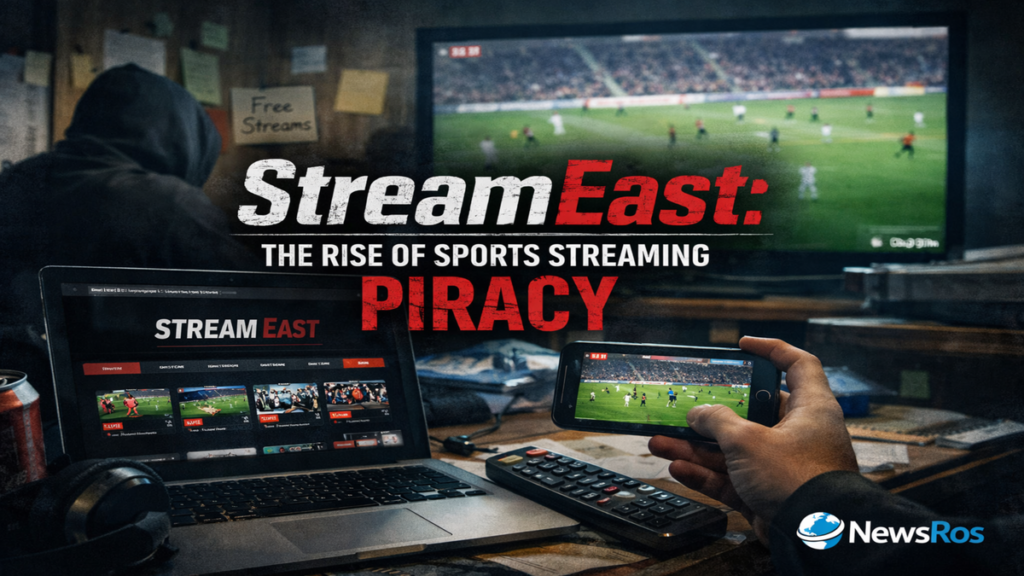

Sports fans around the world have always searched for easier ways to watch their favorite teams. Over the past decade, one website became synonymous with that search: StreamEast. I have followed the transformation of sports broadcasting for years, and few platforms illustrate the tensions between technology, accessibility, and intellectual property more clearly than this controversial streaming network. StreamEast rose quietly from the sprawling ecosystem of online piracy websites to become one of the most widely visited hubs for live sports streaming. At its peak, the platform offered free access to major events ranging from NFL games and European football matches to boxing and mixed martial arts fights.
The appeal was simple and immediate. A visitor could open a browser, select a game, and watch a live broadcast without paying subscription fees or navigating multiple official services. For millions of viewers, StreamEast represented convenience in an increasingly fragmented sports media landscape. Yet behind that convenience lay a complex and controversial system built on unauthorized distribution of copyrighted broadcasts.
The rise of StreamEast coincided with the rapid expansion of streaming services and the explosion of sports media rights deals worth billions of dollars. As leagues and broadcasters moved games behind subscription platforms, piracy sites simultaneously grew in popularity. The platform’s eventual shutdown in 2025 following an international investigation revealed the enormous scale of the piracy economy and the intense global effort to control it. Understanding StreamEast therefore means examining not just a website but a global conflict over how sports are watched, distributed, and monetized in the digital age.
The Emergence of StreamEast in the Online Piracy Ecosystem
StreamEast did not appear overnight. Its development reflected a broader evolution in how digital piracy adapted to the streaming era. Early internet piracy primarily involved downloading files such as movies or television shows through peer to peer networks. Live sports presented a different challenge because broadcasts happen in real time and lose much of their value after the event ends. Over time, piracy networks began creating websites that could distribute live streams to viewers instantly.
StreamEast emerged during the late 2010s as one of these platforms, offering an interface that organized sports streams by league and event. Visitors could navigate through categories such as basketball, soccer, American football, baseball, and combat sports. Each event contained links to multiple streams, allowing viewers to switch if one connection failed. This flexibility made the platform particularly attractive during high demand events such as championship games or major boxing fights.
Unlike traditional piracy networks that hosted content directly, StreamEast acted primarily as an aggregator. The website collected links to streams hosted on external servers across multiple countries. This decentralized approach allowed operators to reduce their legal exposure while maintaining reliable access for users. If one streaming source went offline, another could quickly replace it.
The interface itself was surprisingly polished compared with earlier piracy sites. Clean layouts, schedules of upcoming games, and simple navigation tools helped the platform appear more professional than many competitors. For casual users searching online for free sports streams, StreamEast often appeared near the top of search results, further accelerating its growth.
The Explosion of Demand for Free Sports Streams
The rapid popularity of StreamEast cannot be understood without considering the broader transformation of sports broadcasting. Over the last decade, traditional cable television packages began losing subscribers as viewers shifted toward streaming platforms. Sports leagues responded by selling broadcast rights to a wide range of companies, including established television networks and emerging digital platforms.
While this transition expanded viewing options, it also fragmented access. Fans who once watched most games on a single network suddenly needed multiple subscriptions. A single football fan might require one service for national broadcasts, another for regional coverage, and a third for international competitions. The cumulative cost of these subscriptions quickly became a burden for many viewers.
This fragmentation created an opportunity for piracy websites. StreamEast presented itself as a centralized hub where all these events could be watched in one place. For viewers frustrated with complex subscription systems, the platform offered a simpler alternative.
The economic incentives were powerful. Major sports broadcasting rights deals now reach staggering figures. The National Football League’s domestic television agreements alone exceed one hundred billion dollars over the course of the contracts. Similar multi billion dollar deals exist in European soccer leagues, international cricket tournaments, and global combat sports promotions.
These enormous investments drive broadcasters to protect their rights aggressively. When piracy platforms distribute unauthorized streams, they potentially reduce the value of those broadcasting agreements. For media companies, the threat is not merely theoretical. Analysts estimate that sports piracy costs the industry billions of dollars annually in lost revenue.
The Technology Behind the Platform
From a technological perspective, StreamEast relied on a relatively sophisticated architecture designed to maintain reliability while avoiding direct legal responsibility for hosting copyrighted material. The core website functioned primarily as a directory of links rather than a streaming server itself. Each link redirected viewers to video players hosted on third party servers.
These servers were often located in jurisdictions with limited enforcement of international copyright laws. By distributing its infrastructure across multiple countries, the network made it more difficult for authorities to identify and shut down every component simultaneously. If one domain was blocked or seized, mirror websites could quickly replace it.
Content delivery networks and anonymous hosting providers played important roles in keeping streams accessible. Some streams originated from captured broadcasts of legitimate television channels, while others were relayed through specialized streaming services designed for piracy networks.
Advertising networks formed another key element of the system. Because users did not pay subscription fees, the platform generated revenue through online advertisements. Pop up ads, banner placements, and redirect links provided income each time viewers visited the site. Some advertising partners operated in legitimate markets, while others specialized in high risk advertising often associated with gambling platforms or unverified products.
This revenue model allowed the network to remain profitable despite offering free access to viewers. Investigations later revealed that millions of dollars in advertising income flowed through shell companies linked to the operation.
The Global Investigation That Ended the Platform
For years, piracy websites like StreamEast operated in a cat and mouse game with copyright enforcement agencies. Whenever a domain was seized or blocked, operators launched new domains and resumed activity. However, the enormous scale of StreamEast eventually triggered a coordinated international response.
Media companies, sports leagues, and technology firms formed alliances to combat digital piracy. One of the most influential organizations involved in these efforts was the Alliance for Creativity and Entertainment, a coalition representing major entertainment companies worldwide. The group collaborates with law enforcement agencies to investigate piracy networks and dismantle their operations.
In 2025, investigators working with international partners launched a year long investigation targeting the infrastructure behind StreamEast. The probe involved tracking financial transactions, identifying server locations, and mapping connections between domain registrars and hosting services.
Authorities eventually conducted raids that resulted in the seizure of servers and digital equipment believed to support the streaming network. Two individuals suspected of involvement in operating the platform were arrested near Cairo, Egypt. The operation also uncovered evidence of significant advertising revenue tied to the network.
Following the raids, many domains associated with StreamEast began redirecting visitors to pages encouraging them to watch sports through legitimate broadcasters. The shutdown marked one of the largest enforcement actions ever taken against a sports streaming piracy network.
The Economics of Sports Piracy
Despite the shutdown, the economics that allowed StreamEast to thrive remain largely unchanged. Piracy platforms exploit a fundamental imbalance between consumer demand and the structure of legal access to sports broadcasts.
From the viewer’s perspective, watching a pirated stream often requires little more than a quick internet search. For the operator, launching a streaming site requires modest technical expertise and relatively low startup costs. When traffic grows, advertising revenue can quickly turn the operation into a profitable business.
Meanwhile, legitimate broadcasters invest enormous sums to secure exclusive rights to sports content. These investments are justified by subscription fees and advertising revenue generated through official broadcasts. When large numbers of viewers watch unauthorized streams, those financial models become more difficult to sustain.
Media executives argue that piracy ultimately harms the entire sports ecosystem, including teams, athletes, and production crews who depend on broadcast revenue. However, critics of the current system note that high subscription costs and complex licensing arrangements contribute to the demand for illegal alternatives.
The debate highlights a broader question about the future of digital media distribution. As technology makes content easier to share globally, controlling access becomes increasingly challenging.
The Ongoing Battle Between Fans and the Industry
Even after the shutdown of StreamEast, numerous smaller piracy websites continue to offer unauthorized sports streams. Some attempt to replicate the platform’s interface and features, hoping to attract its former users. Others operate through private communities or messaging platforms that distribute streaming links directly to members.
Enforcement agencies continue to pursue these networks, but experts acknowledge that eliminating sports piracy entirely may be impossible. The internet’s decentralized nature allows new platforms to emerge quickly whenever demand exists.
At the same time, the sports industry is experimenting with new distribution strategies designed to reduce piracy incentives. Some leagues are exploring direct to consumer streaming services that offer comprehensive access to games through a single subscription. Others are negotiating partnerships with technology companies capable of delivering global broadcasts more efficiently.
Technological tools such as artificial intelligence are also being used to detect unauthorized streams in real time. Automated monitoring systems can identify pirated broadcasts within minutes and send takedown requests to hosting providers. While these systems cannot eliminate piracy completely, they help limit its impact during live events.
Ultimately, the battle between piracy networks and media companies reflects the broader evolution of digital media. The same technologies that enable global streaming also make it easier for unauthorized distribution to occur.
Conclusion
The rise and fall of StreamEast illustrates how rapidly the digital media landscape can evolve. What began as a relatively obscure piracy website eventually grew into one of the world’s most widely used destinations for watching live sports online. For millions of viewers, the platform represented convenience and accessibility in a fragmented broadcasting environment.
For sports leagues and broadcasters, however, it represented a serious threat to the economic foundation of modern sports entertainment. The billions of dollars invested in broadcasting rights depend on maintaining exclusive access to games and events. When unauthorized streaming platforms distribute those broadcasts freely, the value of those rights is undermined.
The shutdown of StreamEast marked a significant victory for enforcement agencies and media companies. Yet the underlying dynamics that fueled its growth remain in place. As long as sports broadcasting remains fragmented and expensive, piracy platforms will continue to attract viewers seeking simpler alternatives.
The challenge for the future lies in balancing accessibility with sustainability. Fans want easy and affordable access to games, while leagues and broadcasters require revenue to support athletes, teams, and production infrastructure. Finding that balance will determine whether the next generation of sports streaming is shaped by innovation or by the persistence of digital piracy.
Read: BetMentor Top Betting Sites Explained
FAQs
What was StreamEast?
StreamEast was a popular website that provided unauthorized live streams of sporting events such as NFL games, soccer matches, and boxing fights without official broadcasting rights.
Is StreamEast legal?
No. The platform streamed copyrighted sports broadcasts without permission, making it illegal in many countries and subject to enforcement actions.
Why was StreamEast shut down?
Authorities dismantled the network in 2025 after a year long investigation involving the Alliance for Creativity and Entertainment and Egyptian law enforcement.
Could users face legal consequences?
Legal risks depend on local laws. Some jurisdictions target operators rather than viewers, but accessing pirated streams may still violate copyright regulations.
Are there legal alternatives for watching sports online?
Yes. Official services such as ESPN+, DAZN, Peacock, and league specific streaming platforms provide licensed broadcasts of major sporting events.