
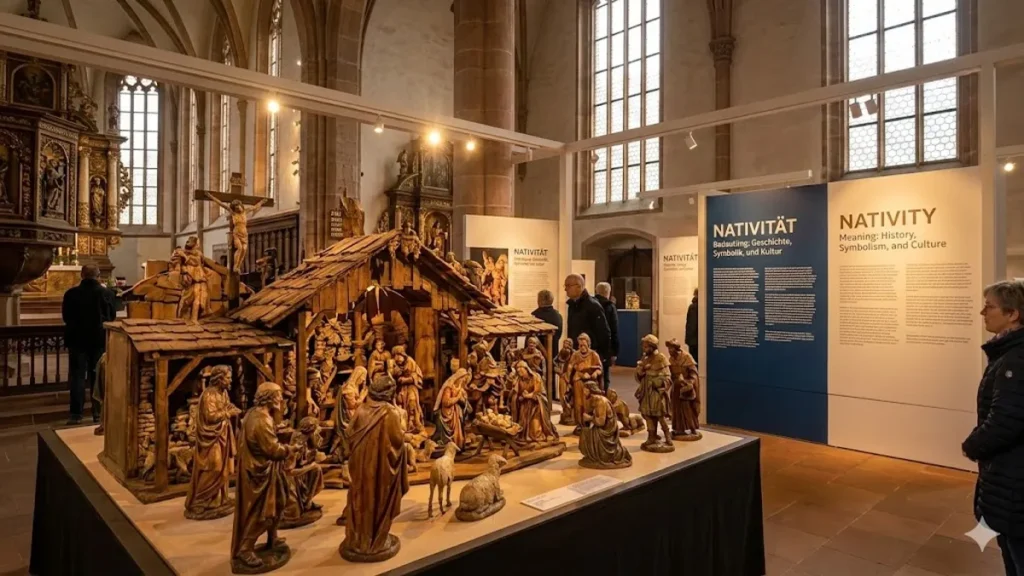

I often think of “Nativität” as more than a word. It is a doorway into language, religion, and human emotion, all centered on the idea of birth. In German, Nativität refers most directly to the nativity, especially the birth of Jesus Christ, a moment that anchors the celebration of Christmas across much of the world. Yet the term carries deeper layers, stretching back to Latin origins and expanding into art, culture, and even personal identity.
At its simplest, Nativität means birth. But in practice, it has come to symbolize far more than a biological beginning. Within Christianity, it marks a moment of profound theological significance, the arrival of Christ in Bethlehem, representing hope, renewal, and divine presence in human form. Beyond religion, the concept has inspired centuries of artistic expression, from Renaissance paintings to modern interpretations, and has influenced how societies understand beginnings and transformation.
The word itself reveals its history. Derived from the Latin nativitas, meaning birth or origin, it entered European languages through Old French and Middle English during the medieval period. Over time, it became closely associated with Christmas, embedding itself in both sacred and cultural traditions.
Understanding Nativität requires looking at it from multiple angles: linguistic, theological, artistic, and symbolic. Each perspective adds depth, showing how a single word can carry centuries of meaning and continue to evolve in a changing world.
Read: E-Hentai Explained: History, Community, and Internet Culture
The Linguistic Roots of Nativität
The story of Nativität begins in Latin, where nativitas served as a formal term for birth or origin. It derives from natus, meaning “born,” itself rooted in the verb nasci, to be born. This linguistic lineage reflects the importance of birth as both a physical and philosophical concept in ancient Roman thought.
During the medieval period, the word traveled into Old French as nativité, eventually entering Middle English around the 12th century. Initially, it was used primarily to denote the feast day celebrating Christ’s birth. Over time, its meaning broadened, encompassing both religious and secular interpretations of origin.
| Language | Term | Meaning |
|---|---|---|
| Latin | Nativitas | Birth, origin |
| Old French | Nativité | Birth, Christmas feast |
| Middle English | Nativity | Birth, especially of Christ |
| German | Nativität | Nativity, sacred birth |
This linguistic journey illustrates how words evolve alongside cultural and religious practices. As Christianity spread across Europe, the term became increasingly tied to the story of Jesus, embedding itself in liturgy, literature, and everyday language.
“Language preserves memory,” wrote linguist David Crystal. “Words like ‘nativity’ carry centuries of cultural experience within them.” Nativität is a prime example, encapsulating both historical continuity and evolving meaning.
The Nativity in Christian Theology
In Christian theology, Nativität refers specifically to the birth of Jesus Christ, a central event described in the Gospels of Matthew and Luke. This moment is not merely historical but deeply symbolic, representing the incarnation of God in human form.
The nativity narrative emphasizes humility. According to the Gospel accounts, Jesus was born in Bethlehem, placed in a manger, and visited by shepherds and later by wise men. This imagery has become foundational to Christian thought, highlighting themes of simplicity and divine accessibility.
Theologically, the nativity marks the beginning of salvation history. It is seen as the fulfillment of Old Testament prophecies and the start of a new covenant between God and humanity.
“The birth of Christ is the hinge of history,” wrote theologian N. T. Wright. “It is where heaven and earth meet in a new way.”
This interpretation has shaped centuries of religious practice, from liturgical celebrations to doctrinal teachings. The nativity is not only commemorated but continually reinterpreted, reflecting the evolving understanding of faith across generations.
Traditions and Rituals in German-Speaking Cultures
In German-speaking regions, Nativität is deeply embedded in Christmas traditions. The celebration extends beyond a single day, encompassing Advent, Christmas Eve, and Epiphany.
One of the most iconic expressions is the nativity scene, known as the Krippe. These detailed displays depict the birth of Jesus, often including figures such as Mary, Joseph, shepherds, and animals. In many households, the arrangement of the scene is a cherished ritual, passed down through generations.
Midnight Mass, or Christmette, is another central tradition. Held on Christmas Eve, it combines liturgy, music, and community, creating a sense of shared experience and reflection.
Carols, or Weihnachtslieder, further reinforce the cultural significance of Nativität. Songs like “Stille Nacht” (Silent Night), first performed in Austria in 1818, have become global symbols of the Christmas season.
| Tradition | Description | Cultural Role |
|---|---|---|
| Krippe | Nativity scene display | Visual storytelling |
| Christmette | Midnight Mass | Spiritual reflection |
| Weihnachtslieder | Christmas carols | Communal expression |
| Advent rituals | Pre-Christmas observances | Preparation and anticipation |
These traditions demonstrate how Nativität functions not only as a theological concept but as a lived cultural experience.
Artistic Interpretations Across Centuries
The nativity has been a central theme in art for centuries, inspiring works that reflect both religious devotion and artistic innovation. From early Christian mosaics to Renaissance masterpieces, the depiction of Christ’s birth has evolved alongside artistic styles and cultural contexts.
Sandro Botticelli’s “Mystic Nativity,” painted around 1501, exemplifies the Renaissance approach, combining religious symbolism with human emotion. The painting captures both the divine and the earthly aspects of the nativity, reflecting the era’s emphasis on realism and perspective.
In later periods, artists continued to reinterpret the theme. Baroque painters introduced dramatic lighting and movement, while modern artists have explored more abstract representations.
Art historian E. H. Gombrich observed that “each age reimagines the nativity in its own image.” This ongoing reinterpretation underscores the enduring relevance of the theme.
Today, nativity imagery appears not only in traditional art but in digital media, installations, and contemporary design, demonstrating its adaptability and continued cultural resonance.
Symbolism: Light, Humility, and Renewal
At its core, Nativität is rich in symbolism. The birth of Christ is often associated with light emerging from darkness, a metaphor that resonates across cultures and belief systems.
The setting of the nativity, a humble stable, reinforces themes of simplicity and accessibility. It suggests that profound transformation can occur in the most ordinary circumstances.
Beyond religious contexts, these symbols have broader applications. The idea of birth as a new beginning is universal, representing personal transformation, hope, and renewal.
“Birth is both an ending and a beginning,” said philosopher Hannah Arendt, emphasizing the concept of natality as central to human existence.
This duality gives Nativität its enduring power. It speaks to both collective beliefs and individual experiences, bridging the gap between the sacred and the everyday.
Nativität Beyond Religion
While rooted in Christian tradition, the concept of Nativität extends into secular contexts. It can refer to one’s birthplace or origin, as well as to astrological charts that map the positions of celestial bodies at the time of birth.
In literature and philosophy, nativity often serves as a metaphor for beginnings and transformation. It appears in discussions of identity, creativity, and change, reflecting its broad applicability.
This expansion of meaning highlights the adaptability of the concept. Even as its religious significance remains central, Nativität continues to evolve, finding relevance in new contexts.
The Modern Relevance of Nativität
In contemporary society, Nativität occupies a complex space. It remains a central element of religious practice while also serving as a cultural symbol that transcends specific beliefs.
The commercialization of Christmas has introduced new interpretations, sometimes overshadowing the original theological meaning. Yet the core themes of Nativität, birth, hope, and renewal, continue to resonate.
Sociologist Zygmunt Bauman noted that “modernity does not erase tradition; it reshapes it.” Nativität exemplifies this process, adapting to changing cultural landscapes while retaining its essential significance.
Takeaways
- Nativität originates from Latin nativitas, meaning birth or origin.
- It is central to Christian theology, representing the birth of Jesus Christ.
- The concept has shaped traditions, especially in German-speaking cultures.
- Artistic interpretations have evolved across centuries.
- Symbolism includes themes of light, humility, and renewal.
- The term extends beyond religion into cultural and philosophical contexts.
Conclusion
I see Nativität as a concept that transcends its origins, carrying meaning across time, language, and culture. It begins with a simple idea, birth, yet expands into a rich tapestry of belief, tradition, and symbolism. From its Latin roots to its place in modern society, it reflects humanity’s enduring fascination with beginnings.
What makes Nativität remarkable is its ability to remain relevant. It speaks to both the sacred and the secular, offering insights into faith, art, and personal transformation. In a world that often feels fragmented, it provides a point of connection, a reminder of shared narratives and universal experiences.
Ultimately, Nativität is not just about a single event or tradition. It is about the idea of renewal, the possibility of change, and the enduring power of beginnings. And in that sense, it continues to resonate, inviting each generation to find its own meaning within it.
FAQs
What does Nativität mean?
Nativität is the German term for nativity, referring primarily to the birth of Jesus Christ and, more broadly, to the concept of birth or origin.
Where does the word originate?
It comes from the Latin nativitas, meaning birth, derived from nasci, which means to be born.
Why is the nativity important in Christianity?
It represents the birth of Jesus Christ, marking the beginning of salvation and symbolizing hope and renewal.
What are nativity scenes?
Nativity scenes, or Krippen, are visual representations of Christ’s birth, commonly displayed during Christmas.
Does Nativität have non-religious meanings?
Yes, it can refer to birthplace, origin, or even astrological birth charts, extending beyond religious contexts.