
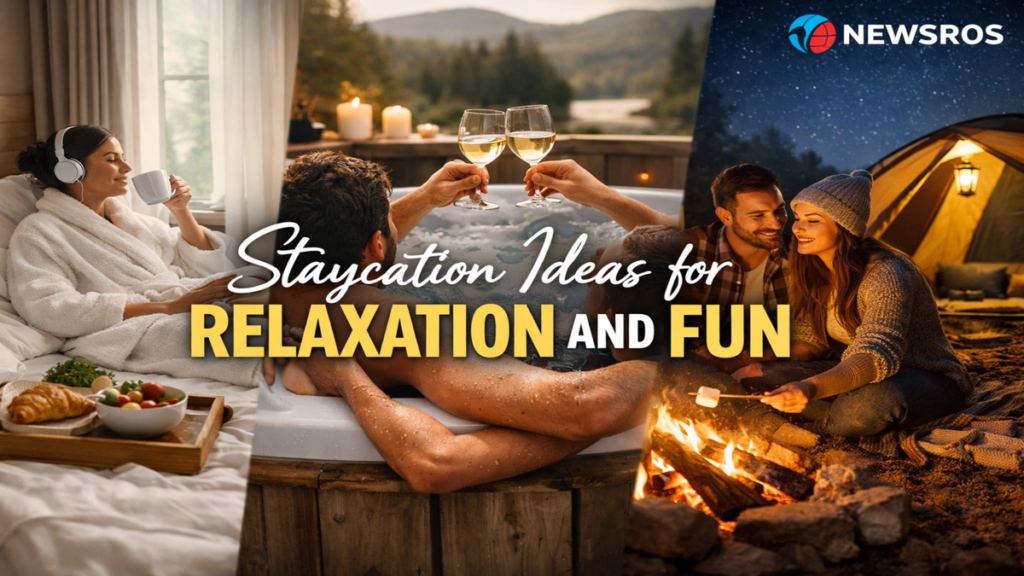

I have come to see the staycation not as a compromise, but as a deliberate act of reclaiming time, space, and attention. In a world where travel is often synonymous with escape, a staycation offers something subtler yet equally powerful: presence. The idea is simple, but the execution demands intention. A staycation is not just staying home. It is about designing an experience that mirrors the emotional and sensory richness of travel, without the logistical friction.
Within the first few hours of a thoughtfully planned staycation, the difference becomes clear. There is no airport rush, no delayed luggage, no need to acclimate to unfamiliar surroundings. Instead, the familiar becomes newly textured. A balcony transforms into a café terrace. A quiet morning becomes a ritual rather than a routine. Research from the U.S. Travel Association has shown that short breaks, even local ones, can significantly improve mental well-being and productivity (U.S. Travel Association, 2022).
The modern staycation sits at the intersection of wellness, economics, and sustainability. Rising travel costs, environmental concerns, and shifting work cultures have made it more relevant than ever. But beyond practicality, it invites something deeper: a reframing of how we experience rest. Rather than fleeing from life, a staycation asks us to rediscover it.
The Evolution of the Staycation
The term “staycation” gained widespread popularity during the late 2000s economic downturn, when households sought cost-effective alternatives to traditional travel. What began as a financial necessity has since evolved into a cultural preference. According to a 2023 report by McKinsey & Company, consumers increasingly prioritize “micro-experiences” over long-haul travel, valuing flexibility and personalization.
Historically, leisure was tied to distance. The farther one traveled, the more legitimate the break seemed. Today, that assumption is being challenged. Urban dwellers, in particular, are rediscovering their own cities. Museums once overlooked become destinations. Neighborhood parks become sanctuaries.
“People are shifting from consumption-based travel to experience-based living,” says travel psychologist Dr. Michael Brein. “A staycation allows individuals to engage deeply with their environment rather than skim across it.”
This shift also reflects broader societal changes. Remote work has blurred the boundaries between labor and leisure. As a result, intentional breaks, even local ones, have become essential. The staycation is no longer a fallback. It is a conscious choice.
Designing the Perfect Staycation
A successful staycation begins with a mindset shift. The goal is not to replicate travel exactly, but to capture its essence. That means creating novelty, structure, and sensory engagement.
Start by defining a theme. Whether it is wellness, culinary exploration, or cultural immersion, a theme provides direction. For example, a “spa retreat” staycation might include curated playlists, aromatherapy, and scheduled relaxation sessions.
Environment plays a crucial role. Small changes can dramatically alter perception. Rearranging furniture, introducing new scents, or even adjusting lighting can create a sense of departure.
“Ritual is what separates routine from experience,” notes hospitality expert Chip Conley. “When people create rituals, even at home, they signal to the brain that something meaningful is happening.”
Equally important is digital detachment. Limiting work-related communication helps establish psychological boundaries. The staycation should feel like a pause, not an extension of daily life.
Staycation Themes and Experiences
| Theme | Key Activities | Emotional Outcome |
|---|---|---|
| Wellness Retreat | Yoga, meditation, spa treatments | Relaxation, clarity |
| Culinary Journey | Cooking global cuisines, tasting menus | Exploration, satisfaction |
| Cultural Immersion | Films, books, virtual museum tours | Intellectual stimulation |
| Adventure at Home | Backyard camping, scavenger hunts | Playfulness, excitement |
| Creative Escape | Painting, writing, music | Expression, fulfillment |
Each theme offers a different pathway to renewal. The wellness retreat emphasizes stillness, while the culinary journey engages the senses. Cultural immersion connects individuals to global narratives without physical travel.
The effectiveness of these themes lies in their intentionality. Rather than passively consuming time, participants actively shape their experience.
The Psychology Behind Staying Close
At its core, the appeal of a staycation is psychological. It reduces decision fatigue while increasing control. Unlike traditional travel, which often involves unpredictable variables, a staycation allows for curated comfort.
Studies in environmental psychology suggest that familiarity can enhance relaxation. According to research published in the Journal of Environmental Psychology, individuals experience lower stress levels in known environments (Korpela et al., 2010).
However, the challenge lies in overcoming habituation. When surroundings are too familiar, they can feel mundane. This is where intentional design becomes critical.
“Novelty doesn’t require distance,” explains behavioral scientist Dr. Katy Milkman. “It requires perspective. Changing how you engage with your environment can create the same psychological benefits as travel.”
This insight reframes the staycation as an exercise in perception. It is not about where you are, but how you experience it.
Budget-Friendly Luxury
One of the most compelling aspects of a staycation is its affordability. Without the costs of flights, accommodation, and transportation, individuals can allocate resources toward enhancing the experience.
| Expense Category | Traditional Vacation | Staycation |
|---|---|---|
| Travel | High (flights, fuel) | Minimal |
| Accommodation | High (hotels) | None |
| Dining | Moderate to High | Flexible |
| Activities | Variable | Customizable |
| Total Cost | $$$$ | $$ |
This financial flexibility allows for indulgence. High-quality ingredients, premium skincare products, or curated experiences become accessible.
“Luxury is not about spending more,” says economist Juliet Schor. “It is about deriving more value from what you spend.”
In this sense, a staycation can feel more luxurious than travel. Without external pressures, individuals can focus entirely on enjoyment.
Technology and the Modern Staycation
Technology has expanded the possibilities of staying local. Virtual tours, online classes, and streaming platforms enable global experiences from home.
Museums such as the Louvre and the British Museum offer digital access to their collections. Cooking classes from international chefs are available through platforms like MasterClass. These tools allow individuals to engage with global culture without leaving their living room.
At the same time, technology can be a double-edged sword. Overuse can undermine the sense of escape. The key is intentional use.
“Digital tools should enhance, not dominate, the experience,” notes media researcher Sherry Turkle. “The goal is connection, not distraction.”
Balancing engagement with disconnection is essential. A well-designed staycation integrates technology as a supplement, not a substitute.
Staycations and Sustainability
Environmental concerns have also contributed to the rise of staycations. Air travel is a significant source of carbon emissions. According to the International Air Transport Association, aviation accounts for approximately 2–3% of global CO2 emissions (IATA, 2022).
By staying local, individuals reduce their environmental footprint. This aligns with broader trends toward sustainable living.
“Choosing a staycation is a small but meaningful step toward responsible travel,” says sustainability expert Dr. Daniel Scott.
Beyond emissions, staycations also support local economies. Spending on local businesses, restaurants, and experiences contributes to community resilience.
Expert Perspectives on Rest and Place
“Rest is not the absence of activity,” says wellness researcher Dr. Saundra Dalton-Smith. “It is the presence of restoration.”
This perspective reframes the purpose of a staycation. It is not about doing less, but about doing differently.
Urban sociologist Richard Florida adds, “Cities are designed for discovery. Most residents simply don’t engage with them as visitors do.”
Together, these insights highlight a central truth: the value of a staycation lies in intentional engagement.
Takeaways
- A staycation is a deliberate, experience-driven approach to rest, not merely staying home
- Themes and rituals transform ordinary environments into meaningful destinations
- Psychological benefits include reduced stress and increased sense of control
- Financial savings allow for targeted indulgence and personalization
- Technology enhances access to global experiences but requires mindful use
- Staycations support sustainability and local economies
- The key to success lies in intentional design and perspective shift
Conclusion
I have found that the most memorable moments of a staycation are often the quietest ones. A slow morning with sunlight filtering through a window. A meal prepared with care. A sense of time stretching rather than slipping away. These moments, though simple, carry a depth that is often lost in the rush of traditional travel.
The staycation invites us to reconsider what it means to take a break. It challenges the assumption that distance is necessary for renewal. Instead, it suggests that rest is a practice, not a place.
In embracing the staycation, we are not giving something up. We are gaining a new way of seeing. The familiar becomes unfamiliar again. The ordinary becomes extraordinary. And in that shift, we discover that the destination was never as important as the experience itself.
Read: ChezCathy: A Digital Food Blog Celebrating Home Cooking and Culinary Storytelling
FAQs
What is a staycation?
A staycation is a planned break spent at home or nearby, designed to replicate the relaxation and enjoyment of travel without long-distance trips.
How long should a staycation last?
A staycation can last anywhere from a weekend to a full week, depending on personal schedules and goals.
Are staycations effective for stress relief?
Yes, research shows that intentional breaks, even local ones, can significantly reduce stress and improve well-being.
What activities are best for a staycation?
Activities depend on your theme but can include cooking, spa treatments, cultural exploration, and creative projects.
How do I make a staycation feel special?
Focus on planning, environment changes, and limiting routine tasks to create a sense of novelty and relaxation.
References
Korpela, K. M., Ylén, M., Tyrväinen, L., & Silvennoinen, H. (2010). Favorite green, waterside and urban environments, restorative experiences and perceived health in Finland. Journal of Environmental Psychology, 30(2), 200–209. https://doi.org/10.1016/j.jenvp.2009.10.003
McKinsey & Company. (2023). The state of tourism and hospitality 2023. https://www.mckinsey.com
International Air Transport Association. (2022). Fact sheet: Climate change & CORSIA. https://www.iata.org
U.S. Travel Association. (2022). Travel trends index. https://www.ustravel.org
Schor, J. B. (2010). Plenitude: The new economics of true wealth. Penguin Press.
Turkle, S. (2015). Reclaiming conversation: The power of talk in a digital age. Penguin Press.