
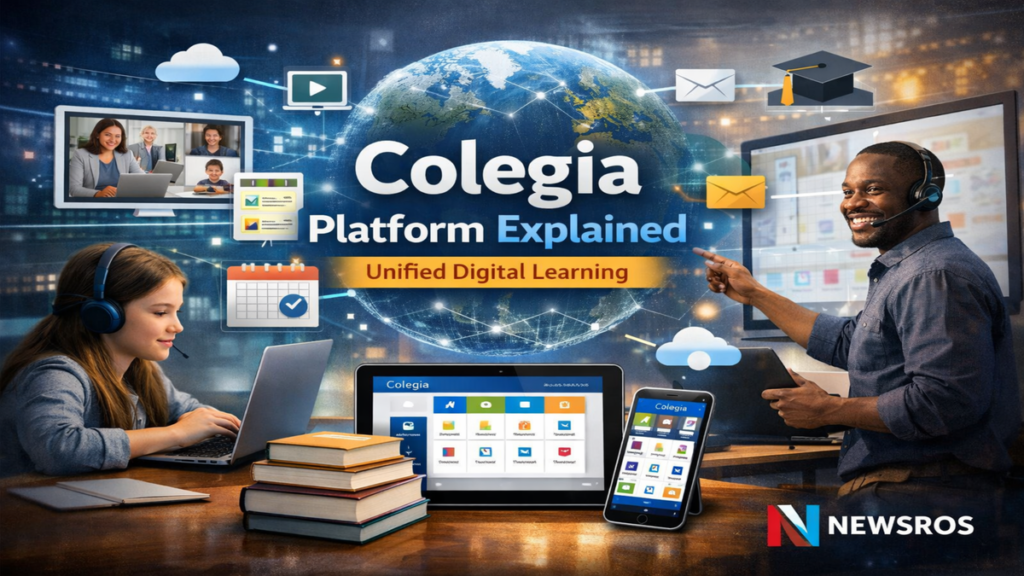

I have watched the rapid digitization of education reshape classrooms across continents, but few platforms have attempted to unify the experience as comprehensively as Colegia. At its core, Colegia is a digital learning ecosystem designed to bring together educational tools, communication channels, and student resources under a single login. Within the first glance, it answers a pressing question educators and families have been asking for years: how can schools simplify digital access while improving learning outcomes?
Colegia functions as a centralized hub where students, teachers, and administrators can seamlessly navigate multiple applications without juggling passwords or platforms. Developed with an emphasis on accessibility and equity, it allows institutions to integrate learning management systems, communication tools, and academic resources into one cohesive interface. For many school districts, especially those serving diverse populations, this integration has become not just convenient but essential.
As classrooms evolve beyond physical walls, the need for streamlined digital infrastructure has intensified. Remote learning during the COVID-19 pandemic accelerated adoption, but the long-term value lies in sustained engagement and operational efficiency. Colegia positions itself as more than a tool; it represents a shift toward unified digital learning environments that prioritize simplicity, inclusivity, and continuity in education.
The Origins of Colegia and Its Mission
Colegia was developed by Academica, one of the largest charter school service organizations in the United States. The platform emerged from a practical challenge: schools were increasingly dependent on fragmented digital tools that created confusion for students and inefficiencies for educators.
The mission behind Colegia centers on simplifying access. By offering a single sign-on portal, the platform eliminates the need for multiple credentials, reducing barriers to participation. This is particularly significant for younger students and families with limited digital literacy.
Education researcher Dr. Michael Horn, co-founder of the Clayton Christensen Institute, once noted, “Technology in education works best when it reduces complexity rather than adding to it” (Horn & Staker, 2015). Colegia embodies this principle by consolidating tools rather than expanding them.
From its early deployment in Florida school systems, the platform has expanded into other regions, adapting to varied educational needs. Its development reflects a broader trend in edtech: moving from tool-based solutions to ecosystem-based approaches.
How Colegia Works: A Unified Digital Ecosystem
At its operational core, Colegia functions as an integrated dashboard. Students log in once and gain access to a suite of applications, including learning management systems, digital textbooks, and communication tools.
The platform’s architecture supports interoperability, allowing schools to customize integrations based on their existing systems. This flexibility is key to its adoption across different districts.
Core Features of Colegia
| Feature | Description | Impact on Users |
|---|---|---|
| Single Sign-On (SSO) | One login for all educational tools | Reduces password fatigue |
| Digital Resource Hub | Centralized access to textbooks and apps | Saves time and improves efficiency |
| Communication Tools | Messaging between teachers, students, and parents | Enhances engagement |
| Data Integration | Aggregates student performance data | Supports informed decision-making |
| Mobile Accessibility | Available on smartphones and tablets | Expands access beyond classrooms |
This consolidation is particularly beneficial in K–12 environments, where students often struggle with managing multiple platforms. By simplifying navigation, Colegia allows users to focus on learning rather than logistics.
The Role of Colegia During the Pandemic
The COVID-19 pandemic marked a turning point for digital learning platforms worldwide. Schools were forced to transition rapidly to remote instruction, exposing weaknesses in existing systems.
Colegia gained prominence during this period as districts sought streamlined solutions. Its single sign-on capability proved invaluable when students were accessing multiple tools from home.
According to the World Bank, over 1.6 billion students were affected by school closures globally (World Bank, 2020). In such a context, platforms like Colegia were not just convenient; they were critical infrastructure.
Educator Linda Darling-Hammond has argued, “Equity in education depends on access to both technology and coherent systems that support learning” (Darling-Hammond et al., 2020). Colegia’s unified approach directly addresses this need by reducing fragmentation.
The pandemic accelerated adoption, but it also highlighted the importance of sustainable digital ecosystems that can support both in-person and remote learning.
Comparing Colegia with Other Learning Platforms
Colegia operates in a competitive landscape that includes platforms like Google Classroom, Canvas, and Schoology. However, its distinguishing feature lies in integration rather than content delivery.
Platform Comparison
| Platform | Primary Function | Integration Level | Target Users | Unique Advantage |
|---|---|---|---|---|
| Colegia | Unified access ecosystem | High | K–12 schools | Single sign-on across tools |
| Google Classroom | Assignment management | Medium | Schools globally | Integration with Google Workspace |
| Canvas | Learning management system | High | Higher education | Robust course management |
| Schoology | LMS with social features | Medium | K–12 and higher ed | Collaborative interface |
While other platforms focus on managing coursework, Colegia emphasizes access and integration. This distinction positions it as a complementary system rather than a direct competitor.
Equity and Accessibility in Digital Learning
One of Colegia’s most significant contributions lies in addressing digital equity. By simplifying access, it reduces disparities caused by technological complexity.
Students from underserved communities often face challenges such as limited device access and lack of technical support. A unified platform minimizes these barriers by offering a consistent user experience.
Education policy expert Linda Darling-Hammond has emphasized that “closing the digital divide requires not just devices, but systems that are easy to use and widely accessible” (Darling-Hammond et al., 2020).
Colegia’s mobile compatibility further enhances accessibility. Students can access resources from smartphones, which are often more widely available than computers in low-income households.
This focus on equity aligns with broader educational goals of inclusivity and equal opportunity, making Colegia a valuable tool in addressing systemic disparities.
Data, Privacy, and Security Considerations
As with any digital platform, Colegia raises important questions about data privacy and security. Schools must ensure that student information is protected while leveraging digital tools.
Colegia adheres to regulations such as the Family Educational Rights and Privacy Act (FERPA), which governs student data in the United States. The platform employs encryption and secure authentication methods to safeguard information.
However, the increasing reliance on digital ecosystems has prompted ongoing debates about data ownership and surveillance in education. Experts caution that transparency and accountability are essential.
Cybersecurity specialist Bruce Schneier has noted, “Security is not a product, but a process” (Schneier, 2015). This perspective underscores the need for continuous evaluation of digital platforms.
Colegia’s centralized model can enhance security by reducing the number of login points, but it also concentrates responsibility, making robust safeguards critical.
The Future of Unified Learning Platforms
The evolution of platforms like Colegia reflects a broader shift in education toward integrated digital environments. As technology becomes more embedded in learning, the demand for seamless systems will continue to grow.
Future developments may include advanced analytics, personalized learning pathways, and greater integration with artificial intelligence tools. These innovations could further enhance student engagement and outcomes.
Education futurist Tony Wagner has argued that “the ability to learn continuously and adapt is the most critical skill for the future” (Wagner, 2012). Platforms like Colegia support this by providing consistent access to resources and tools.
The challenge lies in balancing innovation with accessibility, ensuring that technological advancements benefit all students rather than widening existing gaps.
Takeaways
- Colegia simplifies digital learning through a single sign-on ecosystem.
- It gained prominence during the COVID-19 pandemic as schools shifted online.
- The platform emphasizes integration rather than replacing existing tools.
- Accessibility and equity are central to its design and implementation.
- Data privacy remains a critical consideration in its widespread use.
- It represents a broader trend toward unified digital education systems.
Conclusion
I find that Colegia represents a pragmatic response to one of education’s most persistent challenges: complexity. By consolidating digital tools into a single, accessible platform, it addresses both logistical inefficiencies and barriers to learning. Its rise during the pandemic underscored the urgency of such solutions, but its continued relevance points to deeper structural changes in how education operates.
The platform’s emphasis on equity and accessibility highlights its potential to bridge gaps rather than widen them. Yet, as with any technological system, its success depends on thoughtful implementation, ongoing evaluation, and a commitment to safeguarding student data.
Looking ahead, Colegia stands as a model for how digital ecosystems can support education in an increasingly connected world. Its impact will ultimately be measured not just by adoption rates, but by its ability to enhance learning experiences and outcomes for students across diverse contexts.
Read: MP3 Downloader Explained: Legal, Risks, Future
FAQs
What is Colegia used for?
Colegia is a digital platform that provides single sign-on access to educational tools, resources, and communication systems for students, teachers, and administrators.
Who developed Colegia?
Colegia was developed by Academica, a U.S.-based education service provider specializing in charter school support.
Is Colegia only for K–12 schools?
While primarily designed for K–12 education, its integrated model could be adapted for other educational environments.
How does Colegia improve learning?
By simplifying access to resources and reducing technical barriers, it allows students and teachers to focus more on instruction and engagement.
Is Colegia secure?
Yes, it follows data protection regulations like FERPA and uses encryption and secure authentication, though ongoing vigilance is essential.
References
Darling-Hammond, L., Schachner, A., Edgerton, A. K., Badrinarayan, A., Cardichon, J., Cookson Jr., P. W., & Griffith, M. (2020). Restarting and reinventing school: Learning in the time of COVID and beyond. Learning Policy Institute. https://learningpolicyinstitute.org
Horn, M. B., & Staker, H. (2015). Blended: Using disruptive innovation to improve schools. Jossey-Bass.
Schneier, B. (2015). Data and Goliath: The hidden battles to collect your data and control your world. W.W. Norton & Company.
Wagner, T. (2012). Creating innovators: The making of young people who will change the world. Scribner.
World Bank. (2020). Remote learning during COVID-19: Lessons from today, principles for tomorrow. https://www.worldbank.org