
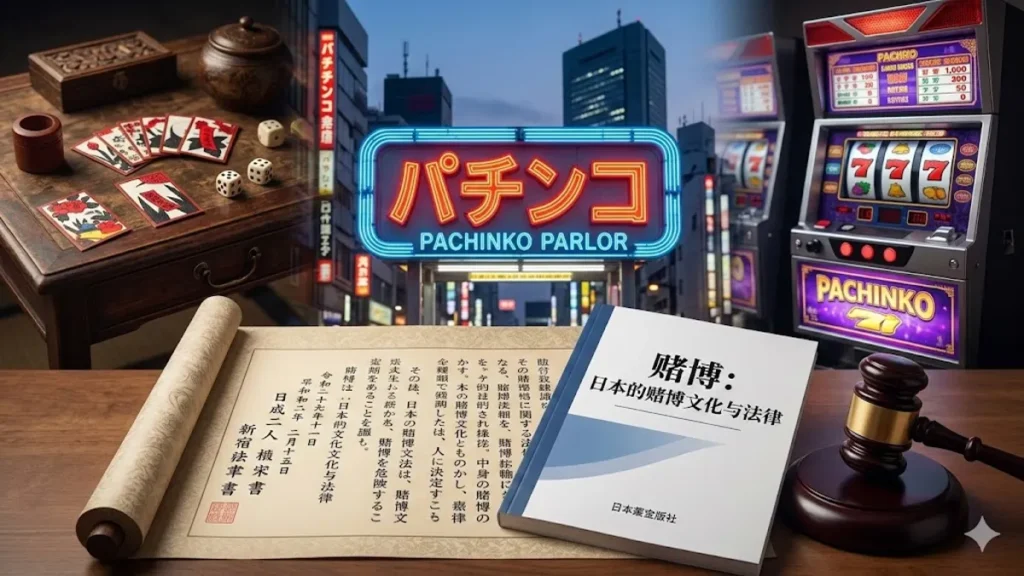

I approach the subject of duboku as a story about contradiction. In Japan, gambling is widely restricted by law, yet it remains deeply embedded in entertainment culture and everyday life. The word duboku, closely associated with the Japanese term “tobaku,” broadly describes gambling or wagering money on games of chance. It captures both the literal act of betting and the social world built around it.
In modern Japan, most forms of gambling remain illegal under the Penal Code. Yet several exceptions exist, including horse racing, lotteries, and the vast pachinko industry that dominates city streets. These legal gray areas reveal a complicated national stance: gambling is discouraged, but certain forms are tolerated or regulated for economic purposes.
Understanding duboku requires looking beyond legal definitions. It involves tracing centuries of cultural habits, underground networks, and shifting government policies. Gambling dens existed in feudal Japan, long before modern casinos became global tourist attractions. Traveling gamblers ran dice games across towns and construction sites, often forming early criminal networks.
Today, echoes of those traditions remain visible in debates over casino resorts, addiction concerns and the continued popularity of pachinko parlors. Duboku is therefore more than a pastime. It is a window into how Japanese society balances regulation, economic reality and human fascination with risk.
The Meaning of Duboku in Japanese Society
Duboku represents a broad cultural concept rather than a single activity. Historically, the word described games involving money wagers, ranging from dice to card games. The practice often carried a moral stigma because it was associated with debt, social instability and criminal activity.
In traditional Japanese society, gambling conflicted with ideals of discipline and hard work. Authorities feared that uncontrolled betting could encourage idleness and disrupt social order. This concern shaped legal policies that criminalized most forms of gambling.
Despite these restrictions, gambling remained common in many communities. Informal games appeared at festivals, construction sites and remote villages. People gathered around dice boards or card tables, placing small wagers that created excitement and social interaction.
Over time, this tension between prohibition and participation shaped the modern understanding of duboku. The term came to symbolize the constant negotiation between law, cultural tradition and economic necessity.
For many scholars, duboku reflects a larger question about Japanese society. It illustrates how strict regulations can coexist with practices that communities quietly tolerate.
Read: AC Milan vs SSC Bari Timeline: Complete Match History and Key Moments
Gambling in Feudal Japan and the Rise of the Bakuto
The history of gambling in Japan stretches back centuries, but it became especially visible during the Tokugawa or Edo period beginning in the 17th century. Traveling gamblers known as bakuto organized many of the games that defined this era.
Bakuto groups often moved between construction projects, ports and rural towns. Laborers who had just been paid gathered in temporary gambling dens to wager their earnings. Dice games and card games were particularly popular.
These networks gradually developed structured hierarchies resembling early criminal organizations. Leaders controlled gambling houses, collected debts and enforced rules through intimidation. Over time, these groups evolved into what would later be associated with organized crime.
Interestingly, the cultural image of bakuto sometimes carried a romantic tone. Stories portrayed them as rebellious figures who challenged authority or protected ordinary people. This mythology influenced later portrayals of gamblers in Japanese cinema and literature.
Yet the reality was far less glamorous. Authorities periodically cracked down on gambling rings, forcing them deeper underground. These cycles of suppression and resurgence strengthened the connection between duboku and criminal networks.
Japan’s Legal Framework for Gambling
Modern Japan maintains strict laws against gambling. The Penal Code prohibits most forms of betting involving money or valuables. Individuals caught gambling can face fines, while operators of illegal gambling businesses face more serious penalties.
However, the government allows specific exceptions through special legislation. These forms of gambling operate under strict regulation and are typically linked to public revenue.
Major Legal Gambling Activities in Japan
| Gambling Activity | Legal Status | Primary Purpose |
|---|---|---|
| Horse Racing | Legal under regulation | Government revenue |
| Bicycle Racing | Legal | Funding public programs |
| Motorboat Racing | Legal | Regional development |
| Lotteries | Legal | Municipal income |
| Casino Resorts | Limited legalization | Tourism and investment |
These activities illustrate Japan’s pragmatic approach. Instead of permitting open gambling markets, the government restricts betting to tightly controlled sectors.
The approval of integrated casino resorts in recent years represents a cautious shift in policy. Officials hope these resorts will attract tourism while maintaining strict oversight.
Even with these changes, gambling remains a sensitive issue. Public discussions frequently focus on addiction risks and the possibility of criminal influence.
Pachinko and the Legal Loophole
Pachinko occupies a unique position in Japan’s gambling landscape. The game resembles a vertical pinball machine in which players launch small steel balls into a maze of pins and slots.
At first glance, pachinko appears to function like a casino slot machine. Yet Japanese law does not classify it as gambling. Instead, pachinko parlors operate under entertainment regulations.
The system works through an indirect reward structure. Players exchange money for steel balls, which they use to play machines. When players win large numbers of balls, they can exchange them for prizes inside the parlor.
These prizes can then be traded at nearby shops for cash. Because the cash exchange occurs outside the gaming establishment, the system technically avoids direct gambling.
Pachinko Industry Snapshot
| Metric | Estimated Figure |
|---|---|
| Parlors nationwide (historical estimate) | About 12,000 |
| Annual spending | Roughly $200 billion at peak |
| Cultural reach | One of Japan’s largest leisure sectors |
| Legal classification | Amusement entertainment |
The pachinko industry has become a major economic force. Brightly lit parlors dominate many urban streets, attracting millions of players each year.
Critics argue that the system effectively legalizes gambling through technical loopholes. Supporters respond that it provides employment, entertainment and tax revenue under regulated conditions.
Illegal Gambling and Organized Crime
Despite legal restrictions and regulated alternatives, underground gambling continues to exist in Japan. Illegal casinos, private betting clubs and gambling mahjong houses operate discreetly in some areas.
Organized crime groups historically maintained connections with these activities. Illegal gambling generates steady income and provides opportunities for loan sharking and debt collection.
Mahjong gambling represents a common example. While the traditional tile game itself is legal, wagering money on it can violate gambling laws. Some underground parlors rely on criminal networks to enforce debt payments.
Online gambling presents a newer challenge for authorities. Offshore betting sites allow Japanese residents to place wagers on sports and casino games despite domestic restrictions.
Law enforcement agencies estimate that billions of yen circulate through these platforms each year. The growth of digital betting has prompted renewed discussion about regulation and consumer protection.
These developments show that the demand for duboku persists even under strict legal limits.
Cultural Representations of Duboku
Gambling themes frequently appear in Japanese popular culture. Films, manga and television series often depict high-stakes games that test intelligence, courage and psychological resilience.
Stories such as Kaiji and Kakegurui portray elaborate gambling scenarios in which characters risk enormous sums or personal freedom. These narratives focus less on financial reward and more on tension and strategy.
Characters in these stories often face moral dilemmas. They must decide whether to trust allies, manipulate opponents or gamble everything on a single decision.
This dramatic portrayal reflects deeper cultural themes. Gambling becomes a metaphor for risk-taking in a society often associated with stability and order.
The popularity of these stories also reveals a fascination with the psychological aspects of duboku. Victory often depends on observation, patience and mental endurance rather than luck alone.
The Social Debate Around Gambling
Public discussion about gambling in Japan has intensified in recent years. Supporters of expanded legal gambling argue that casino resorts could boost tourism and stimulate regional economies.
They point to successful casino markets in cities such as Singapore and Macau as examples of potential growth. Tourism officials hope integrated resorts will attract international visitors and large entertainment events.
Critics, however, warn about the dangers of gambling addiction. Rapid betting cycles and near-miss game mechanics can increase the psychological appeal of gambling activities.
Addiction specialists emphasize the need for preventive policies, including education programs and limits on gambling access.
Public opinion remains divided. Many residents accept limited casino development but express concern about social consequences. As a result, Japanese policymakers have adopted strict entry rules and monitoring systems for new casino resorts.
Economic Implications of Gambling Regulation
The economic impact of gambling in Japan is significant. Pachinko alone historically generated enormous revenue and supported thousands of jobs across the country.
Local governments also benefit from taxes and licensing fees associated with regulated betting industries such as horse racing and lotteries.
At the same time, policymakers must consider the potential social costs of gambling expansion. Treatment programs for addiction, financial counseling and law enforcement all require public funding.
Economists often analyze gambling through a cost-benefit framework. Revenue from tourism and entertainment can stimulate economic activity, but unchecked gambling markets may create long-term social challenges.
Japan’s cautious approach reflects this balancing act. By restricting gambling to a limited number of regulated sectors, officials aim to capture economic benefits while minimizing harm.
Expert Perspectives on Gambling Culture
Several scholars have examined the role of gambling in Japanese society. Sociologist Eiko Siniawer notes that gambling historically conflicted with cultural ideals emphasizing discipline and productive labor.
Economist Masayuki Ueda argues that tightly regulated gambling can serve as a compromise between prohibition and unrestricted markets. Controlled systems allow governments to generate revenue while limiting illegal activity.
Addiction researchers also stress the importance of public awareness. Gambling disorders can develop when games combine rapid play, near-miss outcomes and emotional reward.
Experts therefore recommend comprehensive policies that include regulation, education and accessible treatment services.
These perspectives highlight the complexity of duboku as both a cultural tradition and a public policy challenge.
Key Takeaways
- Duboku refers broadly to gambling in Japan and reflects centuries of cultural and legal tension.
- Most gambling remains illegal under Japanese law, though certain activities are permitted under regulation.
- Historical gambling networks known as bakuto influenced the development of organized crime groups.
- Pachinko operates through a legal loophole that avoids direct cash payouts inside gaming establishments.
- Illegal gambling and online betting persist despite strict enforcement efforts.
- Cultural works frequently portray gambling as psychological competition rather than simple chance.
- Japan continues to debate how to balance economic opportunity with concerns about addiction and crime.
Conclusion
I see duboku as a reflection of a larger human story about risk, restraint and cultural adaptation. Japan’s relationship with gambling has never been simple. Authorities have tried to suppress it, regulate it and occasionally embrace it for economic reasons.
From wandering bakuto gamblers in feudal towns to the bright lights of modern pachinko parlors, gambling practices have continually adapted to changing legal and social conditions. Each era reshaped duboku without eliminating it.
Today, the emergence of casino resorts signals a cautious step toward broader legalization. Yet strict regulations and social safeguards show that Japan remains wary of gambling’s potential consequences.
The future of duboku will likely continue to balance these competing forces. Economic opportunity, cultural fascination and social responsibility will all shape the next chapter of Japan’s complex relationship with gambling.
FAQs
What does duboku mean in Japan?
Duboku refers to gambling or wagering money on games of chance. The term is commonly associated with the Japanese word tobaku, which describes gambling activities.
Is gambling illegal in Japan?
Most gambling is illegal under the Japanese Penal Code. However, certain activities such as horse racing, lotteries and government-regulated betting are allowed.
Why is pachinko considered legal?
Pachinko avoids direct cash payouts. Players exchange winnings for prizes that can later be traded for cash outside the parlor.
Did gambling contribute to organized crime in Japan?
Yes. Historical gambling groups called bakuto developed organized structures that later influenced the formation of yakuza networks.
Are casinos now allowed in Japan?
Japan approved legislation allowing a limited number of integrated casino resorts. The first major development is being built in Osaka.