
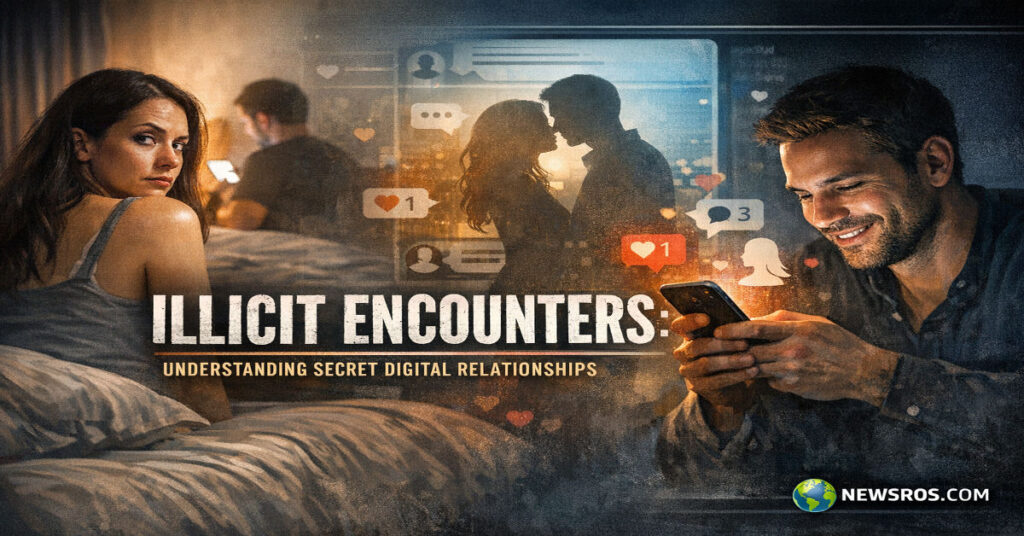

Illicit encounters refer to secret romantic or sexual relationships that occur outside a committed partnership, usually hidden from a spouse or long-term partner. In the digital age, the phrase has also become associated with discreet dating platforms that connect individuals seeking extramarital relationships. These encounters may begin online through private messaging, anonymous profiles, or niche matchmaking sites that promise confidentiality. Although controversial, the growing visibility of such platforms reflects larger changes in how relationships are formed, maintained, and sometimes disrupted in modern society.
When I think about how relationships have evolved in the internet era, it becomes clear that technology has reshaped intimacy in subtle but powerful ways. Dating apps, encrypted communication, and social media interactions have made it easier for people to connect with strangers while maintaining varying degrees of anonymity. In that environment, illicit encounters represent one of the most debated expressions of digital intimacy. They exist at the intersection of personal freedom, secrecy, and the long-standing cultural expectation of monogamy.
Extramarital relationships themselves are not new. Historical records, literature, and anthropological studies show that affairs have existed across cultures for centuries. What has changed is accessibility. Digital technology removes geographic barriers and introduces algorithm-driven matchmaking that can connect individuals who might never have met otherwise. As a result, the conversation around illicit encounters now extends beyond private relationships to include ethical questions about privacy, trust, technology, and the evolving definition of commitment in contemporary society.
The Historical Roots of Secret Relationships
Throughout history, extramarital relationships have appeared in literature, religious texts, and historical accounts, suggesting that secrecy in romantic relationships is not a modern phenomenon. In ancient civilizations, cultural attitudes toward fidelity varied significantly. Some societies strictly enforced monogamy, while others tolerated extramarital relationships among elites or within specific social contexts. Historical documents from ancient Greece and Rome describe complex marital arrangements, where marriage often functioned as a social and economic institution while romantic attachments sometimes existed outside those formal bonds.
The emergence of modern marriage during the eighteenth and nineteenth centuries reshaped these dynamics. Sociologists note that Western societies gradually shifted toward the idea of romantic love as the foundation of marriage. With that change came stronger cultural expectations of exclusivity and emotional loyalty. However, the persistence of affairs throughout history suggests that human relationships rarely conform perfectly to social ideals.
By the twentieth century, researchers began studying infidelity more systematically. Surveys conducted by sociologists in the United States and Europe revealed that extramarital relationships occurred more frequently than public discourse suggested. The difference between private behavior and public values created a paradox: societies strongly condemned infidelity while simultaneously acknowledging that it happened with notable regularity.
This historical context helps explain why the emergence of digital platforms for illicit encounters has sparked such intense debate. These platforms did not invent the behavior itself. Instead, they amplified it by providing tools that make discreet connections easier to initiate and maintain.
The Rise of Digital Platforms Facilitating Affairs
The expansion of the internet in the early 2000s fundamentally transformed the dating landscape. Traditional matchmaking through social networks gradually gave way to online profiles, messaging systems, and algorithm-based compatibility tools. Within that evolving environment, niche platforms began appearing to serve specific relationship interests, including those seeking discreet extramarital relationships.
One of the most widely known platforms in this category launched in 2001 with a marketing message that openly acknowledged the desire for secret relationships. The website’s rapid growth demonstrated that there was a significant market for discreet digital connections. Over time, similar platforms appeared in different regions, each promising privacy and anonymity for users who wished to explore relationships outside their primary partnerships.
Technology made these services possible in ways that earlier generations could hardly imagine. Anonymous user profiles allowed individuals to conceal identifying information while still communicating with potential partners. Secure messaging systems provided a layer of protection against accidental discovery. Mobile applications later introduced location-based features that allowed users to connect with people nearby while maintaining control over how much personal information they revealed.
These developments highlight how digital infrastructure can shape social behavior. When technology lowers barriers to communication, it expands the range of possible interactions. For individuals experiencing dissatisfaction, curiosity, or emotional distance in their primary relationships, discreet platforms can appear to offer an accessible pathway to new experiences.
Psychological Motivations Behind Illicit Encounters
Psychologists emphasize that infidelity rarely occurs for a single reason. Instead, it tends to arise from a complex combination of emotional needs, relationship dynamics, and personal circumstances. Some individuals report engaging in extramarital relationships because they feel neglected or misunderstood within their primary partnership. Others describe seeking novelty, excitement, or a renewed sense of identity.
Relationship therapist Esther Perel has argued that many affairs are driven by a desire to reconnect with aspects of the self that feel lost in routine domestic life. According to her perspective, the allure of secrecy can create a sense of emotional intensity that differs from the stability of long-term relationships. That intensity can make illicit encounters feel especially compelling even when individuals recognize the risks involved.
Another factor often discussed in psychological research is opportunity. Modern workplaces, social networks, and online communication tools increase the number of interactions people have with individuals outside their immediate relationship circle. Each additional connection represents a potential pathway to emotional or romantic intimacy.
However, researchers also note that engaging in secret relationships can create significant psychological strain. Maintaining multiple identities or hiding important aspects of one’s life requires ongoing effort and emotional compartmentalization. Feelings of guilt, anxiety, and fear of discovery often accompany such experiences. For many individuals, these emotional pressures eventually lead to conflict, disclosure, or the end of the affair.
Technology, Privacy, and the Architecture of Secrecy
Digital platforms designed for discreet relationships rely heavily on privacy features. Anonymous usernames, encrypted messaging, and controlled photo sharing are common elements intended to protect user identities. These technological tools illustrate how modern software can be designed specifically to support secrecy.
From a broader perspective, these platforms reflect the evolving relationship between technology and privacy. As more aspects of daily life move online, individuals increasingly rely on digital systems to manage sensitive personal information. This dependence raises important questions about data security and ethical responsibility.
The risks associated with online secrecy became widely visible in 2015 when hackers released personal data from millions of accounts belonging to users of a discreet dating platform. The incident demonstrated how vulnerable digital anonymity can be when large databases of personal information are involved. It also sparked widespread discussions about the consequences of storing sensitive relationship data online.
Since then, many platforms have strengthened encryption and security measures. Yet the fundamental challenge remains: any digital system that stores personal data carries the possibility of exposure. For users seeking secrecy, this reality introduces an additional layer of risk beyond the emotional and relational consequences of the encounters themselves.
Cultural Attitudes Toward Infidelity
Attitudes toward illicit relationships vary widely across cultures and historical periods. In many Western societies, monogamy remains the dominant expectation within marriage. Surveys consistently show that a majority of respondents consider extramarital sex morally unacceptable. Despite this moral stance, studies also indicate that a notable minority of individuals admit to having had affairs at some point in their lives.
Anthropological research suggests that human relationship patterns are more complex than simple models of strict monogamy or unrestricted partnership. Some societies historically practiced forms of polygyny or accepted extramarital relationships under certain conditions. Even in cultures with strong monogamous norms, literature and folklore frequently include stories of secret lovers and forbidden romances.
The internet adds another dimension to these cultural dynamics by connecting individuals across geographic and cultural boundaries. Online platforms bring together people from different backgrounds who may hold different assumptions about relationships and fidelity. This global interaction can both challenge and reinforce existing social norms.
For some individuals, discreet digital encounters represent personal autonomy in the realm of relationships. For others, they symbolize the erosion of trust within families and communities. The ongoing debate reflects deeper questions about how societies balance individual freedom with collective expectations around commitment and honesty.
Economic Dimensions of the Discreet Dating Industry
Beyond its social implications, the market for discreet dating services represents a significant economic sector within the broader online dating industry. Global revenue from digital dating platforms has grown steadily over the past decade, driven by smartphone adoption and the increasing normalization of online matchmaking.
Companies operating in the discreet dating niche often rely on subscription models, premium messaging features, or credit systems that allow users to initiate conversations. Marketing strategies typically emphasize privacy, excitement, and the possibility of meeting like-minded individuals who understand the need for discretion.
The financial success of these platforms illustrates how personal relationships have become intertwined with digital commerce. Just as social media platforms monetize attention and interaction, dating services monetize the desire for connection. In the case of illicit encounters, the business model depends on offering tools that promise secrecy while facilitating communication between users.
This commercialization of intimacy raises ethical questions about the responsibilities of companies that operate in sensitive areas of human relationships. Critics argue that promoting extramarital connections undermines trust and stability within families. Supporters counter that the platforms merely provide services for adults who have already chosen to seek such experiences.
The Social Consequences of Hidden Relationships
Illicit encounters often extend beyond the individuals directly involved, affecting families, partners, and broader social networks. When an affair becomes known, it can lead to profound emotional consequences including feelings of betrayal, anger, and grief. For couples, the discovery of infidelity may trigger difficult conversations about trust, commitment, and the future of the relationship.
Some couples attempt to rebuild their relationships after such experiences through counseling and communication. Relationship therapists note that recovery from infidelity is challenging but not impossible. Rebuilding trust typically requires transparency, accountability, and a willingness to address the underlying issues that contributed to the affair.
At a societal level, discussions about illicit encounters often reflect broader concerns about changing family structures and relationship norms. As technology continues to reshape how people communicate and connect, the boundaries between public and private life become increasingly complex.
Ultimately, the phenomenon highlights the tension between long-standing cultural ideals and the realities of human behavior. Relationships are shaped not only by individual choices but also by the technological and social environments in which those choices occur.
Takeaways
Illicit encounters represent secret romantic or sexual relationships outside committed partnerships, often facilitated today through digital communication and discreet dating platforms. Technology has significantly expanded the opportunities for such relationships by providing tools that enable anonymity and private communication. Psychological research indicates that affairs often stem from emotional dissatisfaction, desire for novelty, or identity exploration rather than a single simple cause. Cultural attitudes toward infidelity remain largely critical, yet the persistence of such relationships across history suggests that they are a recurring aspect of human social behavior. The emergence of online platforms dedicated to discreet connections has intensified debates about privacy, ethics, and the commercialization of intimacy in modern society. Data breaches and security concerns demonstrate that digital anonymity is fragile, adding additional risks to already complex personal situations.
Conclusion
Illicit encounters exist at the crossroads of human desire, social expectation, and technological change. They reveal how deeply personal relationships can be influenced by the tools people use to communicate and the cultural environments in which those tools operate. While affairs have been part of human history for centuries, the internet has transformed how they begin, develop, and sometimes unravel.
Digital platforms make it easier for individuals to explore relationships beyond their primary commitments, but they also introduce new vulnerabilities. Privacy breaches, emotional consequences, and ethical debates remind us that technology cannot fully separate actions from their broader social impact.
Understanding illicit encounters requires a nuanced perspective that goes beyond sensational headlines. These relationships often reflect deeper questions about intimacy, fulfillment, and identity in an era where connection is both easier and more complicated than ever before.
As society continues to adapt to rapid technological change, the conversation about fidelity, privacy, and personal autonomy will likely remain ongoing. Illicit encounters may remain hidden by definition, yet the issues they raise illuminate some of the most fundamental challenges of modern relationships.
Click Here For More Blog Posts!
FAQs
What does the term illicit encounters mean?
Illicit encounters typically refer to secret romantic or sexual relationships outside a committed partnership, often hidden from a spouse or long-term partner.
Are illicit encounters always physical relationships?
No. Many begin as emotional relationships conducted through messaging or online communication before becoming physical, if they do at all.
Why do people engage in illicit encounters?
Psychologists cite multiple reasons including emotional dissatisfaction, desire for novelty, opportunity created by technology, and personal identity exploration.
Are discreet dating platforms legal?
In most countries, online dating platforms are legal as long as they comply with local laws related to privacy, advertising, and user protection.
Can relationships recover after infidelity?
Some couples rebuild their relationships through counseling, communication, and commitment to repairing trust, although outcomes vary depending on circumstances.