
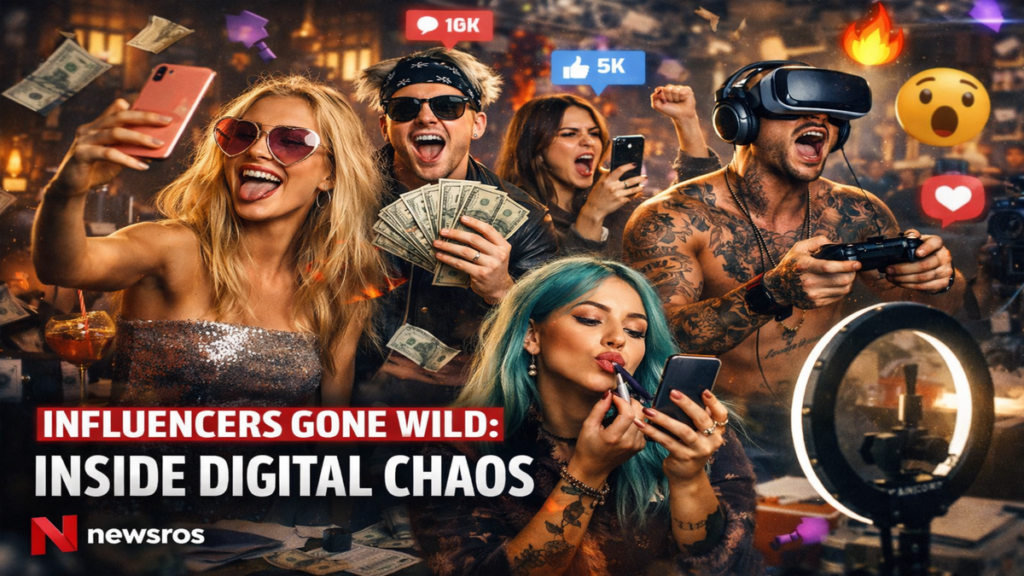

i have spent years observing how online culture evolves, but nothing has accelerated as rapidly or unpredictably as influencer behavior in the age of algorithm-driven media. The phrase “influencers gone wild” captures more than isolated controversies; it reflects a systemic transformation in how digital fame operates. Within seconds of opening platforms like TikTok, Instagram, or YouTube, one encounters a constant stream of exaggerated reactions, risky stunts, and emotionally charged narratives. These are not random acts of chaos but calculated responses to a system that rewards intensity over subtlety.
The question at the heart of this phenomenon is straightforward: why are influencers increasingly behaving in extreme ways? The answer lies in a convergence of technological design, economic incentives, and psychological pressures. Algorithms favor content that provokes strong reactions, whether positive or negative. Audiences, in turn, are drawn to spectacle, often engaging more with controversial material than with ordinary content. This dynamic creates a feedback loop in which influencers are incentivized to escalate their behavior continuously.
In this environment, authenticity becomes a performance, and personal boundaries dissolve under the pressure to remain visible. The result is a culture where the extraordinary becomes ordinary, and where the pursuit of attention can overshadow ethical considerations. Understanding this shift requires examining not only the actions of influencers but also the systems and audiences that sustain them.
The Algorithm as an Invisible Director
The modern influencer operates within a framework largely dictated by algorithms, which function as unseen directors shaping what content is seen and rewarded. These algorithms are designed to maximize user engagement, often by promoting content that elicits strong emotional responses. As a result, influencers quickly learn that moderation rarely goes viral, while extremes frequently do.
The rise of short-form video platforms has intensified this dynamic. TikTok’s “For You” page, for instance, can propel a video to millions of viewers within hours, regardless of the creator’s prior following. This democratization of reach has lowered barriers to entry but has also increased competition. To stand out, creators often resort to more dramatic or unconventional content.
This shift has redefined success metrics. Rather than building a steady, loyal audience over time, influencers now chase viral moments that can catapult them into temporary prominence. The pressure to replicate such success can lead to increasingly risky or controversial behavior. In many cases, the algorithm does not distinguish between positive and negative attention; both contribute to visibility.
The consequence is a digital landscape where the boundaries of acceptable behavior are constantly being tested. Influencers are not merely reacting to audience preferences but are actively shaped by the technological systems that govern visibility. This interplay between human creativity and algorithmic selection has created a culture in which extremes are not only rewarded but expected.
The Monetization of Controversy
Economic incentives play a central role in driving influencer behavior. Visibility translates directly into revenue through advertising, sponsorships, and merchandise sales. In this context, controversy can become a powerful tool for financial gain. A single viral incident can generate millions of views, leading to significant earnings in a short period.
This economic structure encourages influencers to take risks that might otherwise seem unreasonable. Controversial content often attracts more attention than conventional posts, increasing the likelihood of monetization. Brands, while sometimes wary of negative publicity, may still collaborate with influencers who command large audiences, recognizing the value of exposure.
The financial stakes are particularly high for influencers whose livelihoods depend entirely on their online presence. Unlike traditional careers, which may offer stability and predictable income, influencer work is inherently volatile. Earnings can fluctuate dramatically based on engagement levels, creating pressure to maintain visibility at all costs.
This environment fosters a mindset in which boundaries are continually pushed. What begins as a strategic decision to attract attention can evolve into a pattern of increasingly extreme behavior. Over time, the distinction between calculated risk and reckless action becomes blurred, as influencers navigate a landscape where success is often measured in views and clicks rather than in long-term sustainability.
Personal Identity in the Age of Performance
One of the most profound consequences of influencer culture is the transformation of personal identity into a public performance. Influencers are not only content creators but also brands, and their personal lives often become integral to their professional success. This blending of personal and professional identities can create significant psychological strain.
The constant need to present a curated version of oneself can lead to a disconnect between the influencer’s public persona and private reality. Over time, maintaining this dual identity becomes increasingly challenging, particularly as audiences demand authenticity while simultaneously rewarding exaggerated behavior.
The phenomenon of oversharing is a direct result of this dynamic. Influencers may reveal intimate details about their lives to maintain engagement, turning personal experiences into content. While this can foster a sense of connection with audiences, it also raises ethical concerns about privacy and consent, particularly when other individuals are involved.
The pressure to remain relevant further complicates this situation. As trends change rapidly, influencers must continuously adapt their content and, by extension, their identities. This constant reinvention can lead to a sense of instability, as individuals struggle to reconcile their evolving online personas with their sense of self.
Audience Dynamics and Collective Responsibility
The role of the audience in shaping influencer behavior cannot be overlooked. Engagement metrics such as likes, shares, and comments serve as immediate feedback, guiding creators toward content that resonates with viewers. In this sense, audiences are not passive consumers but active participants in the creation of digital culture.
Content that provokes strong emotional reactions is more likely to be shared, amplifying its reach. This creates a cycle in which controversial or extreme content is rewarded with increased visibility, encouraging influencers to produce similar material. Even negative engagement, such as criticism or outrage, contributes to this process by increasing overall interaction.
This dynamic raises questions about collective responsibility. While influencers make the decision to create and share content, audiences play a crucial role in determining its success. The widespread consumption of sensational material reflects broader societal preferences for entertainment that is dramatic and emotionally engaging.
At the same time, audiences often express concern about the very behaviors they help to amplify. This paradox highlights the complexity of digital culture, where individual actions are intertwined with systemic forces. Addressing the challenges posed by influencer behavior requires not only changes at the level of creators and platforms but also a shift in audience engagement patterns.
Psychological Consequences of Constant Visibility
The psychological impact of influencer culture is significant and multifaceted. Constant exposure to public scrutiny can lead to increased stress, anxiety, and burnout. Unlike traditional public figures, influencers often lack institutional support, navigating the pressures of fame largely on their own.
The need to maintain a consistent online presence can disrupt work-life balance, as influencers feel compelled to document and share their experiences continuously. This can lead to a sense of exhaustion, as the boundaries between personal time and professional obligations become increasingly blurred.
Additionally, the reliance on external validation can affect self-esteem. Engagement metrics serve as a measure of success, and fluctuations in these metrics can have a direct impact on an influencer’s sense of worth. This dependence on audience प्रतिक्रिया creates a fragile foundation for self-identity, particularly in an environment where trends and preferences change rapidly.
The cumulative effect of these factors can be detrimental to mental health. As influencers strive to meet the demands of both algorithms and audiences, they may experience a loss of autonomy, feeling controlled by the very systems that enable their success. This tension underscores the need for greater awareness and support within the influencer ecosystem.
Cultural Implications and the Future of Influence
The phenomenon of influencers gone wild has broader cultural implications, reflecting shifts in how society values attention, authenticity, and success. The emphasis on visibility has transformed social media into a space where performance often takes precedence over substance, influencing not only creators but also audiences.
As younger generations grow up in this environment, their perceptions of normal behavior are shaped by the content they consume. The normalization of extreme or controversial actions can influence attitudes and expectations, particularly regarding what it means to achieve success.
Looking ahead, the evolution of technology is likely to further complicate this landscape. The rise of artificial intelligence and virtual influencers introduces new dimensions to the concept of authenticity, challenging traditional notions of identity and representation.
At the same time, there is growing awareness of the challenges associated with influencer culture. Discussions حول mental health, ethical responsibility, and platform regulation are becoming more prominent, signaling a potential shift toward more sustainable practices.
The future of influencer culture will depend on how these issues are addressed. Whether the current trajectory continues or gives way to a more balanced approach remains uncertain, but the stakes are undeniably high.
Takeaways
- Influencer behavior is heavily influenced by algorithmic systems that reward emotional intensity and engagement.
- Financial incentives encourage creators to pursue viral moments, often at the expense of stability and ethics.
- Personal identity is increasingly intertwined with public performance, leading to psychological strain.
- Audiences play an active role in amplifying extreme content through engagement.
- Constant visibility can have significant mental health consequences for influencers.
- Cultural norms are being reshaped by the normalization of extreme online behavior.
- The future of influencer culture will be shaped by technological advancements and evolving societal expectations.
Conclusion
i find it impossible to separate the spectacle of influencer culture from the systems that sustain it. What appears as chaotic or excessive behavior is, in many ways, a logical response to an environment that rewards attention above all else. Influencers are not merely individuals acting in isolation; they are participants in a complex ecosystem that includes platforms, audiences, and economic structures.
This realization does not absolve influencers of responsibility, but it does provide a broader context for understanding their actions. The pressures they face are real, and the incentives they navigate are powerful. At the same time, audiences and platforms must recognize their roles in shaping this landscape.
The path forward requires a collective effort to redefine what is valued in digital culture. By prioritizing authenticity, ethical behavior, and well-being, it may be possible to create a more sustainable model of influence. Until then, the phenomenon of influencers gone wild will continue to reflect the tensions and contradictions of a world increasingly driven by visibility.
Read: RojadirectaTV Explained: Streaming, Risks, and Impact
FAQs
Why are influencers becoming more extreme online?
Algorithms reward high engagement, which often comes from emotionally intense or controversial content, encouraging influencers to push boundaries.
Do influencers intentionally create controversy?
In many cases, yes. Controversy can increase visibility and revenue, making it a strategic choice for some creators.
How does this trend affect viewers?
It can normalize extreme behavior and shape perceptions of success, particularly among younger audiences.
Are platforms responsible for influencer behavior?
Partially. Platform algorithms and policies influence what content is promoted and rewarded.
Can influencer culture become more sustainable?
Yes, but it requires changes from creators, platforms, and audiences to prioritize ethical and balanced content.
References
Abidin, C. (2021). Mapping internet celebrity on TikTok: Exploring attention economies. Cyberpsychology, Behavior, and Social Networking.
Marwick, A. E. (2015). You may know me from YouTube: (Micro)-celebrity in social media. A Companion to Celebrity, 333–350.
Rutledge, P. (2021). The psychology of social media influencers. Media Psychology Review.
Schaffer, N. (2020). The Age of Influence. HarperCollins Leadership.
Tufekci, Z. (2018). YouTube, the great radicalizer. The New York Times.