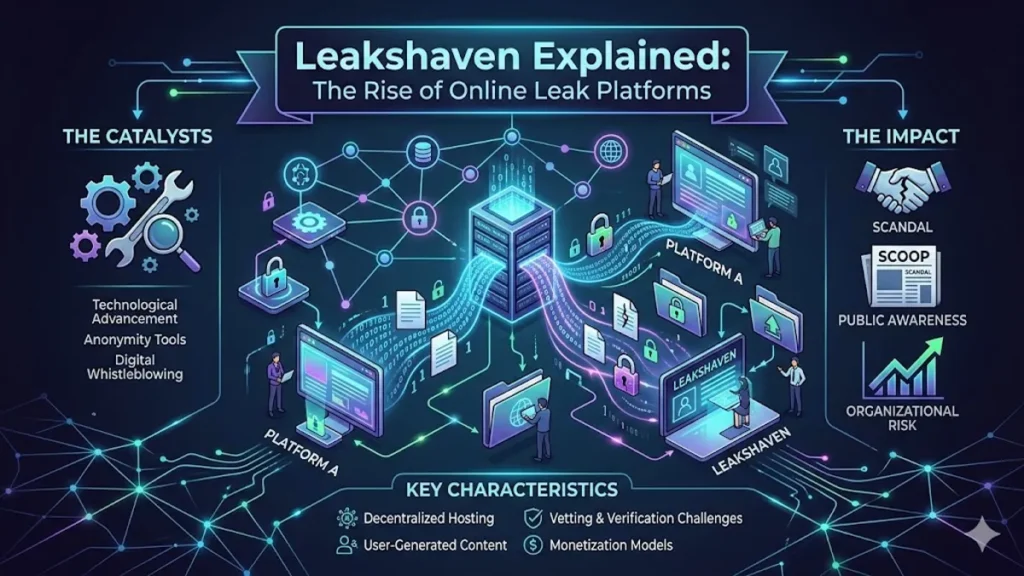

I first encountered the name Leakshaven while exploring how leaked subscription content travels across the internet. Within minutes it became clear that the platform occupies a peculiar place in the digital ecosystem. It is not a social network, not a traditional piracy hub, and not quite a file storage service. Instead, it operates as a structured gateway to leaked media that originally lived behind subscription paywalls.
Leakshaven is widely known as a website that indexes and distributes leaked creator content, particularly material that originated on paid platforms such as OnlyFans or Fansly. These subscription platforms allow creators to charge fans for exclusive content. The model has grown rapidly during the past decade as individuals increasingly build independent digital careers.
Yet the rise of subscription platforms has created a familiar problem in the online world. Once a digital file is shared with even a small audience, controlling its distribution becomes extremely difficult.
Leakshaven reflects that reality. The site functions as an organized archive of redistributed media files that users upload after downloading them from subscription platforms. For some internet users, the platform is a controversial example of piracy culture. For others, it represents the inevitable result of how digital media works.
Understanding Leakshaven requires looking beyond the website itself. The platform sits at the intersection of technology, online fandom, copyright law and internet anonymity. Its growth illustrates how quickly new digital economies can collide with older traditions of file sharing.
The Rise of Leak Platforms in the Subscription Era
The emergence of Leakshaven is closely tied to the explosive growth of subscription-based creator platforms. Services such as OnlyFans, Patreon and Fansly allow creators to sell exclusive media directly to fans. Instead of relying on advertising revenue or traditional media companies, creators charge monthly subscription fees.
This model has empowered thousands of independent artists, influencers and adult performers. Many creators now earn significant income by selling direct access to photos, videos or private interactions.
But subscription platforms also introduce a structural vulnerability. Subscribers typically gain the ability to download or screen record the content they pay for. Once that happens, the file exists outside the platform’s control.
Leak platforms take advantage of that vulnerability by organizing redistributed copies into searchable archives.
Digital culture researchers often describe this phenomenon as a recurring pattern in internet history. When a new content distribution system appears, a parallel ecosystem of sharing and redistribution quickly follows.
Music piracy followed the rise of digital MP3 files. Movie torrents followed the growth of broadband internet. Leak sites like Leakshaven emerged as subscription platforms expanded.
The logic remains the same: if enough people can access a file, eventually someone will share it publicly.
Read: Spotifydown Explained: Download Tools and Streaming Debate
What Leakshaven Is and How It Works
Leakshaven presents itself as a searchable platform where users can locate collections of leaked media originally published behind paywalls. While its exact internal operations are not publicly documented, its structure resembles a hybrid between a file archive and a search index.
Visitors typically encounter a database organized by creator names. Each creator page links to media collections that may include images, videos or downloadable archive files.
Some versions of the site also provide systems allowing users to request specific content collections. These requests are sometimes referred to as “packs,” where users can request an entire catalog of a creator’s media.
The site’s design reflects an important feature of modern leak platforms: organization. Early piracy networks often relied on chaotic file sharing communities. Newer sites operate more like digital libraries.
The more structured the archive becomes, the easier it is for users to locate specific material.
This organizational approach allows Leakshaven to function less like a chaotic message board and more like a cataloged database.
How Leak Platforms Aggregate Content
Behind the scenes, leak platforms typically rely on a multi-stage process to gather content.
The first stage is acquisition. A subscriber downloads media from a subscription platform. This can happen through legitimate downloads, screen recording software or manual file extraction.
The second stage is distribution. The files are uploaded to external hosting platforms or private sharing networks.
The final stage is aggregation. Websites like Leakshaven organize links or archives into searchable categories so users can easily find them.
The process resembles the structure of torrent trackers that dominated internet piracy in the early 2000s.
However, the technology has evolved. Modern cloud storage services allow enormous libraries of files to be stored and distributed quickly. Indexing tools automatically categorize content by name or keyword.
The result is an ecosystem where leaked material spreads faster and remains accessible longer than ever before.
Content Organization on Leakshaven
Leakshaven’s user interface appears designed to simplify navigation through large quantities of content. Instead of random file listings, users encounter structured categories.
These categories often include creator names, media collections and downloadable file archives.
The structure can resemble the organization of legitimate streaming platforms, which is one reason leak sites sometimes feel familiar to users.
Feature | Function | User Benefit
Creator Index | Lists creators alphabetically or by popularity | Makes searching easier
Media Collections | Groups files into bundles or archives | Allows bulk downloads
Search System | Keyword search across creator names | Faster discovery
Request Packs | Lets users request missing content | Expands database library
This structured system turns a scattered collection of leaked media into something closer to a digital catalog.
Safety and Trust Concerns
Visitors often ask whether platforms like Leakshaven are technically safe to use. The answer is complicated.
Some automated website analysis tools report relatively high safety ratings based on technical scanning. These scans check for malware, malicious scripts or phishing attempts.
Other cybersecurity reviewers caution that piracy platforms can still carry risks even if malware is not detected.
Those risks may include misleading advertisements, data collection or links leading to unsafe file hosts.
Cybersecurity experts often emphasize an important distinction between security and legality. A website may technically operate without malware while still participating in activities that violate copyright law.
Users therefore face two separate questions when visiting such platforms. The first is whether the site contains harmful software. The second is whether accessing its content may violate legal protections for creators.
Both issues remain central to the broader debate surrounding leak platforms.
The Global Audience Behind Leak Sites
Despite their controversial nature, leak sites often attract large audiences.
Traffic analysis from digital marketing tools suggests that Leakshaven receives millions of visits each month. Users arrive from a wide range of countries, indicating that interest in leaked content is a global phenomenon.
Country | Approximate Share of Visitors | Estimated Traffic Portion
United States | Highest share | Largest user base
India | Significant share | Rapidly growing audience
Saudi Arabia | Moderate share | Expanding mobile traffic
United Kingdom | Steady share | Established user base
Germany | Consistent share | European audience growth
The international nature of this traffic reveals an important feature of the internet. Digital files do not respect geographic borders.
Once a piece of media enters a sharing network, it can circulate worldwide within hours.
Ethical Questions Around Leaked Creator Content
The existence of platforms like Leakshaven raises significant ethical questions about digital labor and intellectual property.
Creators who rely on subscription platforms often depend on exclusivity to generate income. When their content appears on leak sites, potential subscribers may choose to access the leaked version instead of paying.
For independent creators, even small revenue losses can have meaningful financial consequences.
Supporters of strict copyright enforcement argue that leak platforms undermine creator livelihoods and violate digital ownership rights.
Others view the issue through the lens of internet culture. Online communities have long embraced the idea that information wants to be free and that digital sharing is inevitable.
This philosophical divide mirrors earlier debates around music piracy and film streaming.
The tension between accessibility and ownership remains unresolved.
Privacy and Anonymity in Leak Communities
Users of leak platforms often prioritize anonymity. Because the content involved may be controversial or legally sensitive, many visitors take steps to conceal their identities.
Common privacy practices include using virtual private networks, anonymous email accounts and encrypted messaging services.
Some leak platforms themselves emphasize privacy features, such as neutral payment descriptions or account deletion options.
These measures reflect a broader trend across the internet. Communities involved in controversial activities frequently adopt privacy tools to reduce traceability.
The emphasis on anonymity makes leak platforms difficult to regulate or monitor.
Why Leak Sites Are Difficult to Shut Down
Efforts to remove leak platforms often face significant technical challenges.
One reason is the decentralized nature of the internet. Websites can move their hosting infrastructure between different countries with varying copyright laws.
Another factor is the widespread use of external file hosts. Even if a leak site disappears, the underlying files may remain stored on multiple servers.
Domain names can also change rapidly. When authorities block one domain, operators sometimes launch another within hours.
These structural features of the internet make leak platforms highly resilient.
Legal pressure can slow them down, but eliminating them entirely has proven extremely difficult.
The Future of Leak Ecosystems
The ongoing growth of subscription platforms suggests that leak ecosystems will continue evolving.
Several technological developments may shape the next phase of this digital conflict.
Artificial intelligence could allow automated systems to index leaked content with greater accuracy.
Decentralized storage networks may make files nearly impossible to remove from the internet once uploaded.
At the same time, creators are developing countermeasures such as digital watermarking, content fingerprinting and legal enforcement strategies.
The struggle between creators seeking control and communities promoting redistribution is likely to continue for years.
Leakshaven represents only one chapter in that larger story.
Key Takeaways
• Leakshaven is a website known for organizing leaked subscription content from creator platforms.
• The platform functions primarily as an index linking users to redistributed media archives.
• Leak sites emerge because digital files can be copied and shared easily once distributed online.
• Millions of users from around the world visit such platforms each month.
• The phenomenon highlights tensions between creator income, copyright protection and internet sharing culture.
• Privacy tools and decentralized hosting make leak platforms difficult to eliminate.
• The growth of subscription-based creator economies will likely continue fueling similar sites.
Conclusion
The story of Leakshaven is not simply about one website. It is about the broader realities of the internet age.
Digital platforms have created unprecedented opportunities for creators to build independent careers. Subscription services allow artists, influencers and performers to connect directly with their audiences.
Yet the same technology that enables those opportunities also makes control nearly impossible.
Once a file travels beyond the walls of a platform, it becomes vulnerable to copying, redistribution and archiving.
Leak sites such as Leakshaven exist in that gap between control and freedom. They reflect both the strengths and the weaknesses of the digital world.
For creators, they represent a constant challenge to protect intellectual property. For users, they represent the internet’s enduring culture of sharing.
As the online creator economy continues to expand, the conflict between exclusivity and accessibility will likely intensify.
Leakshaven is one visible sign of that ongoing digital negotiation.
FAQs
What is Leakshaven?
Leakshaven is a website known for hosting or indexing leaked content originally posted on subscription-based creator platforms.
Why do leak platforms exist?
They exist because digital files can easily be copied and redistributed once shared online with paying subscribers.
Is Leakshaven a piracy site?
Many critics classify it as a piracy platform because it distributes content without the creator’s permission.
Can creators remove leaked content?
Creators can request takedowns or pursue legal action, but removing all copies is extremely difficult once files spread online.
Are leak platforms common?
Yes. Similar platforms have appeared repeatedly as digital media and subscription content models continue to grow.