
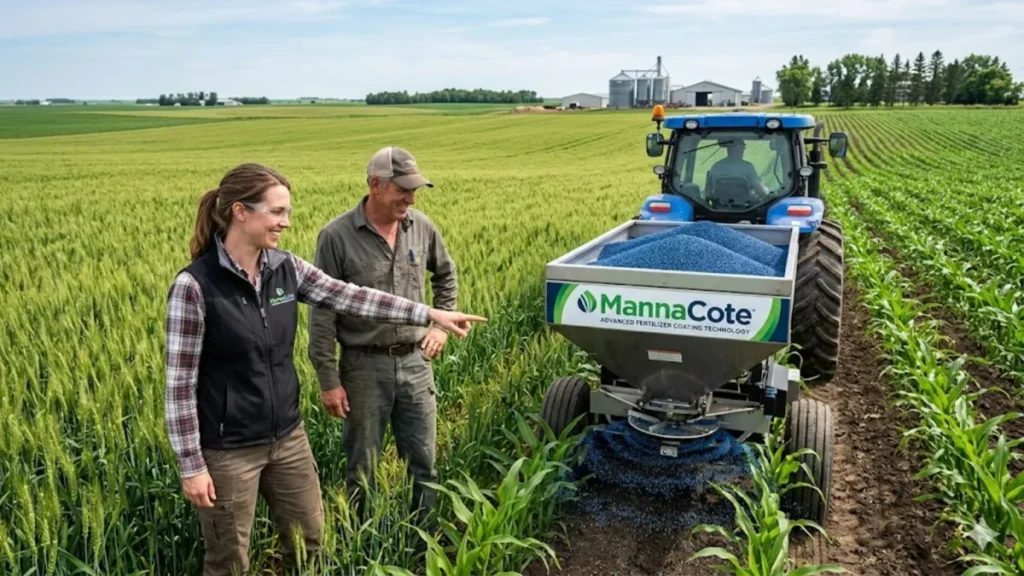

I often think about how quietly transformative agricultural technologies can be. Farmers rarely discuss them in sweeping headlines, yet innovations in fertilizers, coatings, and soil management steadily reshape how food is grown across the world. One such development is MannaCote, a specialized coating technology designed to improve the delivery and efficiency of crop nutrients.
At its core, MannaCote refers to a protective coating applied to fertilizers or micronutrient formulations. The coating helps regulate how nutrients dissolve and become available to plants, ensuring that crops absorb them gradually rather than losing them rapidly through runoff or leaching. In an era when agriculture must produce more food while reducing environmental impact, such technologies are becoming increasingly important.
Farmers face a delicate balancing act. Nutrients such as nitrogen, phosphorus, potassium, and micronutrients are essential for plant growth, yet conventional fertilizer application often leads to inefficiencies. Rainfall, soil chemistry, and microbial activity can wash nutrients away before crops can absorb them. According to the Food and Agriculture Organization, nutrient losses in agricultural systems represent both an economic cost for farmers and an environmental risk for ecosystems.
Coating technologies like MannaCote aim to address this challenge. By encapsulating nutrients within protective layers, manufacturers create controlled-release systems that synchronize nutrient availability with plant growth cycles. The result can be higher yields, lower fertilizer waste, and reduced environmental contamination.
Though it may sound like a minor chemical innovation, MannaCote sits at the intersection of agricultural science, environmental stewardship, and global food production.
The Science Behind Nutrient Coating Technologies
Modern fertilizers are far more sophisticated than the simple nutrient mixtures used a century ago. Researchers now design products with carefully engineered coatings that regulate how quickly nutrients dissolve in soil.
MannaCote belongs to a category known as controlled-release fertilizer coatings. These coatings form a protective barrier around fertilizer granules, slowing their interaction with soil moisture. As water penetrates the coating layer, nutrients diffuse gradually into the surrounding soil environment.
The principle behind this system is relatively straightforward. Plants require nutrients continuously during growth, but conventional fertilizers release nutrients rapidly after application. This mismatch between supply and demand often results in inefficiency.
According to agronomist Dr. Patrick Fixen, a specialist in plant nutrition:
“Controlled-release technologies allow nutrient availability to more closely match plant uptake patterns.”
By aligning nutrient release with crop needs, coatings like MannaCote can improve nutrient use efficiency.
The coating materials themselves vary. Many formulations incorporate polymers, organic compounds, or mineral layers designed to withstand environmental stress while gradually degrading in soil.
Read: Afruimwagens and Modern Road Clearance Vehicles
Why Nutrient Efficiency Matters in Modern Agriculture
Agricultural productivity has increased dramatically since the mid-twentieth century, largely due to advances in fertilizers, irrigation, and crop genetics. However, the environmental costs of intensive farming have also become more visible.
Nutrient runoff from agricultural fields contributes to water pollution in rivers, lakes, and coastal ecosystems. Excess nitrogen and phosphorus can trigger harmful algal blooms, which reduce oxygen levels and damage aquatic habitats.
The United Nations Environment Programme has identified nutrient pollution as a major global environmental challenge. Improving fertilizer efficiency is therefore a priority for both farmers and policymakers.
Technologies such as MannaCote address several key issues:
- Reducing nutrient runoff
- Improving crop nutrient uptake
- Lowering fertilizer application rates
- Enhancing soil health
Soil scientist Dr. Rattan Lal, a leading researcher in sustainable agriculture, has emphasized the importance of efficient nutrient management.
“The future of agriculture depends on producing more with fewer environmental costs.”
Controlled-release coatings represent one pathway toward achieving that balance.
Types of Nutrient Coating Technologies
Although MannaCote represents a specific formulation, it belongs to a broader family of coating technologies used in fertilizer manufacturing.
Common Controlled-Release Fertilizer Technologies
| Technology Type | Coating Material | Release Mechanism |
|---|---|---|
| Polymer-coated fertilizers | Synthetic polymers | Gradual diffusion through coating |
| Sulfur-coated fertilizers | Sulfur layers | Cracks in coating release nutrients |
| Organic coatings | Biodegradable materials | Microbial breakdown in soil |
| Resin-coated fertilizers | Resin polymers | Temperature-dependent diffusion |
Each technology offers different advantages depending on crop type, soil conditions, and climate.
Polymer-coated fertilizers, for instance, are widely used in turf management and horticulture because they provide predictable nutrient release patterns. Sulfur-coated fertilizers are more common in large-scale field crops due to their lower cost.
MannaCote technology typically falls within the category of advanced coating systems designed to balance durability with environmental compatibility.
Agricultural Applications of MannaCote
Farmers apply coated fertilizers across a wide range of crops, including cereals, vegetables, fruit orchards, and specialty horticulture.
In row crops such as corn or wheat, coated nutrients help ensure that plants receive consistent nourishment during critical growth stages. In horticulture, where plants may remain in the soil for extended periods, controlled-release fertilizers reduce the need for frequent nutrient applications.
Example Crop Applications
| Crop Type | Benefit of Coated Nutrients |
|---|---|
| Corn | Sustained nitrogen availability |
| Vegetables | Reduced nutrient leaching |
| Fruit orchards | Long-term nutrient delivery |
| Turfgrass | Consistent growth without burn risk |
Agricultural extension specialists often recommend coated fertilizers in areas prone to heavy rainfall or irrigation. These conditions increase the likelihood of nutrient loss in conventional fertilizer systems.
Controlled-release coatings help stabilize nutrient availability under such conditions.
Environmental Benefits and Sustainability
Sustainability has become a defining issue in global agriculture. With the world population projected to exceed 9 billion by mid-century, food production must increase without further degrading ecosystems.
Technologies like MannaCote contribute to this effort by improving nutrient efficiency.
The International Fertilizer Association reports that controlled-release fertilizers can significantly reduce nitrogen losses compared with conventional formulations. Reduced nutrient runoff helps protect freshwater ecosystems while lowering greenhouse gas emissions associated with fertilizer production.
Environmental chemist Dr. Vaclav Smil has noted:
“Efficient nutrient management is one of the most powerful tools available for sustainable agriculture.”
By minimizing waste, coating technologies reduce both economic costs and environmental impact.
These benefits explain why governments and agricultural agencies increasingly promote advanced fertilizer technologies as part of sustainable farming initiatives.
Economic Considerations for Farmers
Despite their advantages, coated fertilizers typically cost more than conventional fertilizers. Farmers must therefore evaluate whether the benefits justify the higher initial investment.
The economics often depend on several factors:
- Crop value
- Soil characteristics
- Climate conditions
- Fertilizer application costs
In high-value crops such as fruits and vegetables, the improved nutrient efficiency often offsets the additional cost. Reduced fertilizer applications and higher yields can lead to positive economic outcomes.
In large-scale grain production, adoption varies depending on market conditions and regional agricultural practices.
Agricultural economist Dr. David Zilberman has argued that technological adoption in farming depends heavily on cost-benefit analysis.
“Farmers adopt innovations when the economic incentives align with environmental benefits.”
As fertilizer prices fluctuate and environmental regulations increase, coated nutrient technologies may become more attractive.
Research and Future Developments
The next generation of fertilizer coatings is already under development. Researchers are exploring biodegradable polymers, nano-scale coatings, and environmentally responsive materials.
These advanced coatings may respond to soil temperature, moisture levels, or microbial activity, releasing nutrients precisely when crops need them.
Scientists are also studying the integration of micronutrients into coating systems. Elements such as zinc, boron, and manganese are essential for plant health but are often applied inefficiently.
By incorporating these nutrients into coating technologies, manufacturers can deliver balanced nutrient profiles through a single product.
Such innovations reflect a broader transformation in agricultural science. Fertilizer products are increasingly designed as integrated nutrient management systems rather than simple chemical inputs.
Takeaways
- MannaCote is a coating technology used to regulate nutrient release in fertilizers.
- Controlled-release coatings help synchronize nutrient availability with plant growth cycles.
- These technologies reduce nutrient loss through runoff and leaching.
- Coated fertilizers support sustainable agriculture by improving nutrient efficiency.
- Environmental concerns are driving increased interest in advanced fertilizer coatings.
- Adoption depends on economic factors such as crop value and fertilizer costs.
- Future developments may include biodegradable and environmentally responsive coatings.
Conclusion
Agriculture has always depended on quiet innovations that gradually transform the way crops are grown. MannaCote represents one such advancement. By controlling how nutrients interact with soil and plants, coating technologies help farmers use fertilizers more efficiently and responsibly.
The implications extend far beyond individual farms. Improved nutrient efficiency reduces environmental pollution, conserves resources, and supports global food security. As agricultural systems confront the dual pressures of population growth and climate change, such innovations will become increasingly important.
Yet technology alone cannot solve agriculture’s challenges. Effective nutrient management also requires careful planning, soil monitoring, and farmer education. Coating technologies work best when integrated into broader sustainable farming practices.
In the coming decades, the success of agriculture will depend on the ability to produce more food while protecting the ecosystems that sustain it. Innovations like MannaCote offer a glimpse of how science and sustainability can move forward together.
FAQs
What is MannaCote?
MannaCote is a nutrient coating technology used in fertilizers to control how nutrients are released into soil, improving plant uptake and reducing nutrient loss.
How do controlled-release fertilizers work?
Controlled-release fertilizers use protective coatings that regulate how quickly nutrients dissolve, ensuring gradual nutrient availability aligned with plant growth.
Why are fertilizer coatings important?
They help reduce nutrient runoff, increase fertilizer efficiency, and improve crop yields by delivering nutrients at optimal rates.
Are coated fertilizers environmentally friendly?
Many coated fertilizers reduce nutrient pollution and improve sustainability, though their environmental impact depends on coating materials.
Do farmers widely use coated fertilizers?
Adoption varies by crop type and region, but usage is increasing in high-value crops and environmentally sensitive farming systems.