
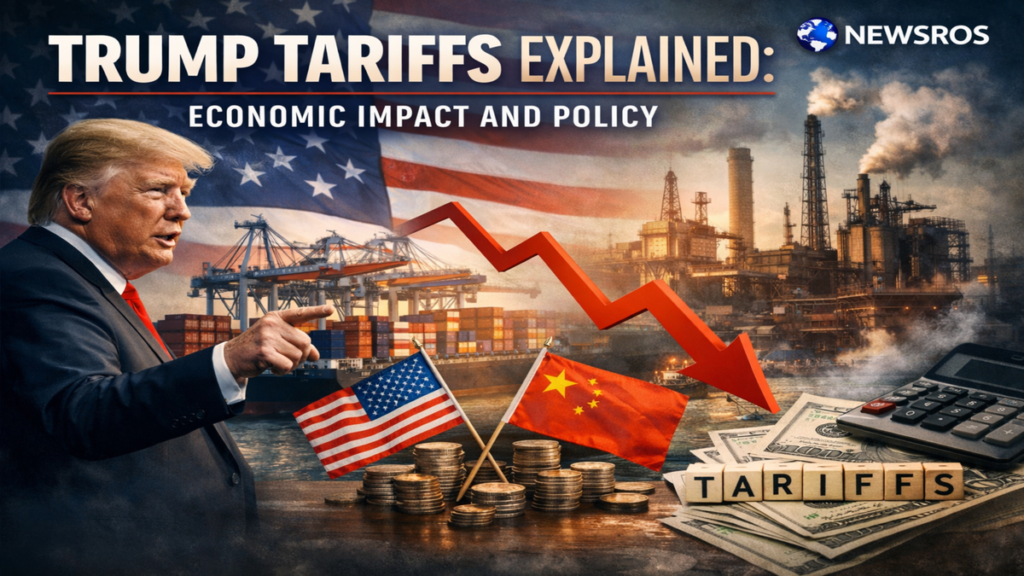

I have often found that tariffs are best understood not as isolated economic tools, but as expressions of national priorities and anxieties. For readers seeking clarity on Trump tariffs, they refer to a series of trade measures introduced during the presidency of Donald Trump between 2017 and 2021, targeting imports from multiple countries but focusing heavily on China. These tariffs were intended to reduce trade deficits, protect domestic industries, and counter what the administration described as unfair trade practices.
Within the first months of implementation, the effects were visible across industries and markets. Prices on imported goods rose, supply chains began to adjust, and trading partners responded with their own tariffs. According to the U.S. International Trade Commission, these measures impacted hundreds of billions of dollars in trade flows, making them one of the most expansive tariff programs in modern American history.
Yet the significance of these tariffs extends beyond numbers. They marked a philosophical shift. For decades, the United States had championed free trade and globalization. The Trump administration instead embraced economic nationalism, arguing that open markets had disadvantaged American workers. This tension between global integration and domestic protection forms the core of the tariff story, one that continues to shape economic debates today.
The Intellectual Roots of the Policy Shift
I have come to see that the Trump tariff strategy did not emerge in isolation. It reflected a broader reevaluation of globalization that had been building for years. In the decades leading up to 2016, international trade expanded rapidly, driven by agreements, technological advances, and the rise of global supply chains. While this expansion increased efficiency and lowered costs, it also contributed to job displacement in certain industries, particularly manufacturing.
The political response to these changes gained momentum in the early 21st century. Economists such as David Autor documented the so-called “China shock,” highlighting how increased imports from China affected U.S. labor markets. These findings became part of a wider narrative that globalization had uneven benefits.
Trump’s campaign capitalized on this sentiment, framing trade deficits as evidence of unfair practices. Once in office, his administration pursued tariffs as a corrective measure. This approach drew on older economic ideas rooted in protectionism, which argue that shielding domestic industries can foster growth and stability.
“Trade policy is often shaped as much by politics as by economics,” observes historian Douglas Irwin. This insight helps explain why tariffs, despite their complexity, became a central feature of the administration’s agenda.
The Mechanics of Tariffs and Their Implementation
Tariffs are essentially taxes on imported goods. When a tariff is imposed, importers must pay an additional cost, which is often passed on to consumers in the form of higher prices. In theory, this makes domestic products more competitive by raising the cost of foreign alternatives.
The Trump administration used several legal mechanisms to implement tariffs. Section 232 of the Trade Expansion Act allowed tariffs on steel and aluminum imports on national security grounds. Section 301 of the Trade Act of 1974 targeted intellectual property practices, particularly those associated with China.
The scope of these measures was unprecedented in recent history. By 2019, tariffs covered a vast array of products, from industrial components to consumer goods. This breadth ensured that the impact would be felt across multiple sectors.
What distinguishes these tariffs is not just their scale, but their strategic intent. They were designed not only to protect domestic industries but also to pressure trading partners into negotiations. This dual purpose blurred the line between economic policy and geopolitical strategy.
The Escalation into a Trade War
The most significant consequence of the tariffs was the escalation into a trade conflict between the United States and China. What began as targeted measures quickly expanded into a broader confrontation involving hundreds of billions of dollars in goods.
China responded with its own tariffs on American exports, including agricultural products such as soybeans. This retaliation had immediate effects on U.S. farmers, who faced reduced access to one of their largest markets. The U.S. government introduced subsidy programs to offset these losses, highlighting the interconnected nature of trade policy.
The trade war extended beyond tariffs. It included restrictions on technology transfers, scrutiny of Chinese investments, and debates over intellectual property rights. The conflict underscored the growing competition between the two countries, not just economically but strategically.
“Trade disputes often reveal deeper geopolitical tensions,” notes economist Paul Krugman. In this case, the tariffs became a visible manifestation of a broader rivalry, one that continues to influence global politics.
Economic Consequences Across Industries
I have observed that the economic effects of the tariffs were neither uniformly positive nor uniformly negative. Instead, they varied significantly across industries. Steel producers, for example, benefited from reduced competition, leading to increased domestic production. However, industries that relied on steel as an input, such as automotive manufacturing, faced higher costs.
This pattern repeated across sectors. Retailers experienced increased costs for imported goods, which were often passed on to consumers. Agricultural producers faced declining exports due to retaliatory tariffs. Meanwhile, some domestic manufacturers gained temporary advantages.
The Congressional Budget Office reported that tariffs contributed to higher prices and reduced overall economic efficiency. At the same time, certain regions experienced localized benefits, particularly those with strong manufacturing bases.
“Tariffs create winners and losers,” says economist Gary Hufbauer. “The challenge is that the losses are often more widespread than the gains.”
This uneven impact complicates the evaluation of tariff policy. It raises questions about how benefits and costs should be measured and distributed.
Global Supply Chains Under Pressure
The tariffs also had profound effects on global supply chains. For decades, companies had optimized production by sourcing components from multiple countries. Tariffs disrupted these networks, forcing businesses to reconsider their strategies.
Some companies shifted production to other countries to avoid tariffs. Others absorbed the costs or passed them on to consumers. These adjustments required time and investment, creating uncertainty in the short term.
The broader effect was a movement toward diversification. Rather than relying heavily on a single country, companies began exploring alternative suppliers. This trend has continued, influenced by both economic and geopolitical factors.
“Global supply chains are resilient, but they are not immune to policy shocks,” says trade analyst Chad Bown. The tariffs served as such a shock, accelerating changes that might otherwise have taken years.
Political Narratives and Public Perception
Tariffs are not just economic instruments. They are also political symbols. The Trump administration framed them as a defense of American workers and industries. This framing resonated with many voters, particularly in regions affected by industrial decline.
At the same time, critics argued that tariffs functioned as hidden taxes, increasing costs for consumers and businesses. This debate reflects broader differences in how economic policy is understood and communicated.
Public perception of tariffs often depends on context. For some, they represent protection and fairness. For others, they signify inefficiency and conflict.
“Economic policies are judged not only by outcomes but by narratives,” notes political economist Dani Rodrik. This insight helps explain why tariffs remain a contentious issue.
The Role of Institutions and International Law
The implementation of tariffs also raised questions about international trade institutions. The World Trade Organization, which governs global trade rules, became a focal point for disputes. Several countries challenged U.S. tariffs through WTO mechanisms.
At the same time, the United States expressed frustration with the WTO, arguing that its rules were outdated and insufficient to address modern challenges. This tension reflects a broader debate about the future of global trade governance.
The tariffs thus contributed to a period of uncertainty in international economic relations. They highlighted the limitations of existing frameworks and the need for adaptation.
Long-Term Implications for Trade Policy
I have come to understand that the most lasting impact of the Trump tariffs may be their influence on future policy. Even after changes in administration, many tariffs remained in place. This continuity suggests a shift in how trade policy is approached.
There is now greater acceptance of using tariffs as strategic tools, even among policymakers who previously favored free trade. This shift reflects changing economic realities and political priorities.
“The consensus around globalization has weakened,” says economist Dani Rodrik. “Countries are rethinking their approach to trade.”
This reevaluation is likely to shape policy for years to come, influencing decisions about tariffs, trade agreements, and economic strategy.
Expert Perspectives on Economic Strategy
Economists remain divided on the effectiveness of tariffs. Some argue that they can provide leverage in negotiations and protect strategic industries. Others emphasize their costs and potential to escalate conflicts.
Douglas Irwin highlights the historical context, noting that tariffs have long been part of economic policy. Paul Krugman cautions against their use as a primary tool, emphasizing the importance of cooperation. Meanwhile, Dani Rodrik advocates for a balanced approach that considers both economic efficiency and social stability.
These differing perspectives reflect the complexity of the issue. There is no simple answer, only a range of considerations.
Takeaways
- Trump tariffs represented a major shift toward protectionist trade policy
- The U.S.-China trade war became a defining feature of the period
- Economic impacts varied widely across industries and regions
- Global supply chains were disrupted and restructured
- Tariffs served both economic and political purposes
- International trade institutions faced new challenges
- The legacy of these policies continues to shape global trade debates
Conclusion
I have come to see the story of Trump tariffs as a reflection of broader tensions in the global economy. They are not merely taxes on imports. They are signals of how nations navigate competition, cooperation, and change.
Their impact is complex and ongoing. They have reshaped industries, influenced policy, and sparked debates that extend far beyond economics. For some, they represent a necessary correction. For others, they highlight the risks of turning inward.
What remains clear is that trade policy is no longer a background issue. It is central to how countries define their economic futures. And in that sense, the legacy of these tariffs is still unfolding.
Read: Florida Woman Wins Monopoly Lottery $5M Prize
FAQs
What were Trump tariffs designed to achieve?
They aimed to reduce trade deficits, protect domestic industries, and address perceived unfair trade practices, particularly involving China.
Did tariffs increase prices for consumers?
Yes, many studies found that tariffs led to higher prices on imported goods, which were often passed on to consumers.
How did China respond to the tariffs?
China imposed retaliatory tariffs on U.S. exports, particularly affecting agriculture and manufacturing sectors.
Are these tariffs still in effect today?
Many remain in place, continuing to influence trade relations and economic policy.
What is the main debate حول tariffs?
The debate centers on whether tariffs protect domestic industries effectively or create broader economic inefficiencies.
References
U.S. International Trade Commission. (2023). Economic impact of Section 301 tariffs. https://www.usitc.gov
Congressional Budget Office. (2020). The effects of tariffs on the U.S. economy. https://www.cbo.gov
Irwin, D. A. (2017). Clashing over commerce: A history of U.S. trade policy. University of Chicago Press.
Bown, C. P. (2020). The U.S.-China trade war and Phase One agreement. Peterson Institute for International Economics.
Rodrik, D. (2018). Straight talk on trade: Ideas for a sane world economy. Princeton University Press